
 Aging in Place Directory Hub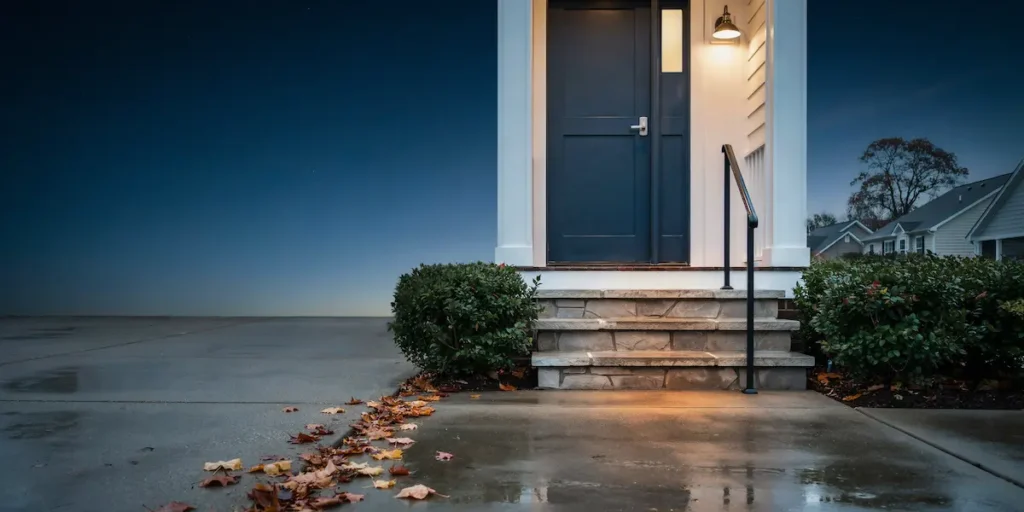
I have never gotten over the fact that this season and that injury share a name.
Twelve years of home visits as an occupational therapist working with older adults, and every October I would catch myself saying “we need to talk about falls this fall,” then hear it and wince.
It sounds like a bad pun. It’s actually a useful warning, and the reason has less to do with October itself than with what October is setting up.
I want to do this the way I used to do it standing in people’s living rooms, because that’s the version that stuck.
The problem. The causes. The solutions.
Then the money, the questions to ask, and a plan you can start this weekend.
PART ONE: THE PROBLEM
Autumn is when the phone started ringing
Here is what I noticed, year after year.
My caseload got busier starting in late October. Not dramatically. Not all at once. A steady uptick that ran through the holidays and into January.
The people hadn’t changed. Nobody’s balance suddenly collapsed on October 15th. The house hadn’t moved an inch.
What changed were the conditions. All of them. In the same six weeks. And nobody adjusted for it.
That’s the problem in one sentence: autumn quietly stacks a dozen new hazards on top of a body that’s already working harder than it was in July, and almost nobody treats it as a season that requires preparation.
Spring gets a cleaning. Winter gets a coat and a shovel. Autumn gets a pumpkin on the porch and no safety thought at all.
What the numbers actually say, including the part that surprised me
More than one out of four adults over 65 falls each year, and less than half ever tell a doctor about it.
Falls send about 4.5 million older adults to the emergency department annually, roughly 3.1 million treated and released, and about 1.4 million admitted to the hospital. About 300,000 hip fracture-related hospitalizations due to older adult falls each year.
One in ten falls causes an injury serious enough to restrict someone’s activity for a day or more.
Now here’s the honest part, and I’d rather you hear it from me than catch me shading it.
When the CDC analyzed an estimated 3 million fall-related emergency visits by season, autumn had the lowest share of the year, 24.3%, compared with 26.2% in winter. The seasonal difference showed up only in falls that happened outdoors: winter accounted for 29.8% of outdoor falls, versus 25.8% in spring and 22.2% in both summer and autumn. Indoor falls barely moved with the calendar at all.
So if you’re keeping score by emergency room visits, the spike is a winter event, not an autumn one.
I still want your attention in September. Here’s why.
Roughly 34% of those winter outdoor falls were weather-related, ice and snow, compared with 14.5% in spring and under 2% in summer and autumn. That ice arrives on walkways that stopped draining in October because the gutters clogged. It lands on steps nobody added traction to. It happens in the dark because the clocks changed. And it happens to legs that got weaker over three months of skipped walks.
Autumn is not the season with the most falls. It’s the season that builds them.
That’s a better reason to act, not a weaker one. In winter you’re reacting. Right now you’re upstream of the whole thing.
The reassurance, and it’s real
Fear of falling is its own risk factor. People who get frightened move less, get weaker, and then fall more. That’s the trap, and I don’t want you anywhere near it.
So let me be clear about what I’m doing here. I’m not describing a decline. I’m describing weather, daylight, and household logistics, conditions, all of them changeable, none of them about you.
Autumn is also the one season where the hazards announce themselves in advance. The leaves haven’t dropped yet. The clocks haven’t changed. The first frost hasn’t landed.
You’re reading this with a running head start on every single item below. Almost nobody uses that head start.
You’re about to.
PART TWO: THE CAUSES
There are five. I want you to be able to name them, because a reader who can name a cause can aim a fix at it.
Cause #1: The Light Collapse
This is the biggest one and the most underestimated.
Daylight saving time ends Sunday, November 1, 2026, at 2:00 a.m. One weekend, and suddenly it’s dark at 5:15 in the afternoon. The walk from the car to the front door, the trip to the mailbox, the last three steps up the porch, all of it moves from daylight into dusk overnight.
Now layer on what’s happening in the eye itself. The pupil gets smaller and less responsive to changes in light. The lens yellows. Contrast sensitivity, your ability to tell a dark step edge from the dark step below it, drops. Dark adaptation slows, so stepping from a bright kitchen into a dim hallway leaves you functionally blind for longer than it used to.
The NIH puts the scale of it plainly: people in their sixties need about three times more light for comfortable reading than people in their twenties.
So the available light falls off a cliff in one weekend, and the eye’s ability to work in low light declined years ago. Those two things collide in the same week, right where the step edge is.
There’s a second lighting problem nobody warns you about: the low autumn sun. In October and November the sun sits much lower at morning and late afternoon, glare straight into your eyes at exactly the hours you’re walking to the car or coming up the driveway. Glare erases a step edge completely.
I had clients tell me “the curb just wasn’t there.” They weren’t exaggerating. For their eyes, it wasn’t.
Cause #2: The Ground Changes Character
Wet leaves are as slippery as ice. People think I’m being dramatic. A layer of wet leaves on a walkway, a wooden deck, or a painted porch step gives your shoe almost nothing to grip. They’re slick, they shift underfoot, and they’re shaped like nothing your foot can predict.
Leaves hide things. Under that beautiful copper drift is the cracked section of sidewalk, the raised tree root, the edge of the step, the garden hose you never coiled, the sprinkler head, the drop-off where the walkway meets the grass. Your foot goes where your eye says it’s safe, and your eye is looking at leaves.
Blocked gutters in October become ice patches in November. Leaves clog the downspout, water overflows across the walkway, and the first cold snap freezes it. This is the single clearest line between an autumn chore skipped and a winter fall, and it’s the mechanism behind a real share of those weather-related winter falls in the CDC data.
The first frost arrives before anyone is ready. Black ice doesn’t wait for winter. It shows up in the same three places every year: the bottom step, the shady side of the walk, and any painted or metal surface. Painted wooden steps are the sneakiest, paint is slick to begin with, and frost or a wet leaf on top of it is a slide. The pre-9 a.m. trip to the car is the highest-risk moment of the entire autumn.
Cause #3: The Autumn Wardrobe
This one surprises people, and it deserves to be taken seriously, because you change nearly everything that touches the ground within about three weeks.
Shoes come out of storage. Boots, loafers, and dress shoes return after months of sneakers and sandals. Old shoes have soles worn smooth. New boots have stiff soles your feet haven’t learned yet.
Socks come back. Plenty of people go barefoot at home in summer. In October the socks return, and socks on hardwood or tile is one of the most reliable indoor slip setups there is.
Robes and long pajamas return. A hem that touches the floor catches on a stair tread or under a foot, most often on the nighttime walk to the bathroom.
Coats take away your balance tools. A bulky coat restricts arm swing, which is part of how you balance. A hood cuts off peripheral vision. Gloves make it harder to grab a railing fast. Hands jammed in pockets on a cold morning means no hands free to catch yourself. A scarf drifts across your line of sight.
That’s three or four balance tools removed before you’ve left the driveway.
Cause #4: The House Fills Up
Heating season means cords. Space heaters, electric blankets, extra lamps, every one arrives with a cord that has to cross a floor. Cords in walking paths appear in October and stay until March.
The rugs come back, with curled corners from being rolled up all summer. A curled corner is a toe-catcher.
The entryway becomes the wettest, most crowded spot in the house. Wet shoes, dripping umbrellas, tracked-in leaves, a mat that slides. And everyone stops there to take off a coat while balancing on one foot, on a wet floor, in low light. If I could station myself in one square yard of the American home from October to March, it would be that one.
Autumn chores are secretly the most dangerous chores. Gutters, storm windows, hoses, bulbs, patio furniture, decorations. Nearly all of it involves ladders, step stools, overhead reaching, and awkward loads on uneven wet ground.
Reaching overhead alone shifts your center of gravity backward, one of the most common ways people go down while feeling perfectly steady a second earlier.
Cause #5: The Body Quietly Loses Ground
This is the one that doesn’t announce itself, and it’s the one I’d bet on if I had to pick the cause behind a February fall.
You move less, so you get weaker. When the weather turns, daily walks stop. Leg strength and balance decline measurably over a few months of reduced activity, faster after 65 than most people expect. The person who falls in February usually started getting weaker in October.
Cold and flu season brings new medications. The CDC’s fall-prevention program flags whole classes of drugs that raise fall risk: sedatives and sleep aids, benzodiazepines, opioids, antidepressants, antipsychotics, anticonvulsants, muscle relaxants, anticholinergics, antihistamines, and medicines that affect blood pressure. Read that list again and notice how much of it sits on the drugstore shelf in October, the nighttime cold formula, the allergy pill, the sleep aid.
Being sick is itself a fall-risk event: dehydration, weakness, and standing up dizzy.
The time change disrupts sleep for a week or two, and poor sleep dulls balance and reaction time, right as the evenings go dark.
The two weeks I’d circle on a calendar
If I could aim your attention at one window, it would be the last week of October and the first week of November.
Peak leaf drop across most of the country. First frosts. The clock change on November 1. Halloween decorations and evening visitors. The start of holiday preparation.
Every category above lands at once. Do the work in the next few weeks and you arrive at that window already prepared, instead of reacting inside it.
PART THREE: THE SOLUTIONS
Each cause has a fix. Here they are matched up one to one, with real costs.
Solutions for The Light Collapse
Add motion-sensor lighting outdoors at the front path, the driveway, and any exterior steps. Motion sensors matter more than switches, because the light arrives before you do.
Battery and solar stick-up units are the fast win, expect roughly $15 to $65 per spotlight, and you can put them up yourself with no electrician. Hardwired floodlights are brighter and permanent; expect roughly $250 to $600 apiece installed, with professional installation averaging around $425.
Add motion-sensor night lights indoors along the hallway and the bed-to-bathroom route. Place them low, near the floor.
Brighten the entryway and stairwell. Higher lumens, not higher wattage. This is fall prevention even though it doesn’t sound like it.
Put high-contrast tape on the front edge of every stair tread, outdoors and indoors. Your eye needs to be told where the floor changes. Dark steps get light tape; light steps get dark. Grit-surfaced rolls give you traction and contrast at once, expect roughly $15 to $40 for a 35-foot roll, which is usually enough for a full set of steps.
Fight the glare. A brimmed hat or sunglasses for the low-sun hours. And when you can’t see the ground, stop. Don’t walk through it.
Give your eyes a beat at every threshold. Coming from a bright room into a dark one, pause a few seconds with a hand on the door frame. That pause is free and it works.
Solutions for The Ground Changing Character
Book leaf removal and gutter cleaning now, while it’s still easy to schedule. Autumn is peak season for both trades and prices climb with demand.
Leaf removal runs about $170 for a typical visit, figure roughly $160 to $290 for a quarter-acre, more for larger lots, and roughly $150 to $500 for a seasonal contract. Gutter cleaning averages around $168, with most homeowners paying roughly $119 to $234; a two-story house runs roughly $180 to $360.
When you book, say this specifically: “I need the walkways, the steps, and the driveway cleared at every visit, not just the lawn.” Crews default to the grass. Your fall risk is on the concrete.
Please don’t do the gutters yourself. Not the roof, not the extension ladder, not the tall step stool with the wobbly leg. Gutter cleaning costs about the price of a nice dinner out. A hip fracture costs months. This is the easiest math in the whole article.
Adopt one seasonal rule: never walk across leaves you can’t see through. Sweep the path or go around it.
Add traction before frost season, not after. Anti-slip tape or a grit-additive porch paint on wooden steps, ramps, and painted decking. Both are inexpensive and both last.
Keep ice melt by the door starting mid-October, not December. The first frost beats the first snow by weeks.
Add a second handrail if any set of steps you use has only one, or none. This is the structural fix on this list and it’s worth real money. A simple handrail on a few porch steps runs roughly $250 to $400 installed; larger or decorative runs go roughly $275 to $1,150, depending on material and length. Have it installed, a handrail that pulls out of the wall is worse than no handrail, because you trusted it.
Change the route when conditions are bad. Use the garage door instead of the front steps. Let someone else get the mail on a frosty morning. Rerouting isn’t defeat. It’s what a pilot does.
Solutions for The Autumn Wardrobe
Audit the footwear. Turn every shoe and slipper over. Worn-smooth tread gets retired, no sentimentality. What you want: a rubber sole with visible tread, a back that grips your heel, and a fit that doesn’t make your toes clench.
Get grip socks or house shoes with rubber soles. Then wear plain socks only inside something with a sole.
Shorten or replace any robe or pajama hem that touches the floor. A tailor charges very little for this and it removes a nighttime hazard permanently.
Rethink the coat. Choose one that lets your arms swing. Keep your hands out of your pockets, gloves instead. Push the hood back outdoors and turn your whole head to look, not just your eyes.
Break in new boots indoors first, before they meet a wet step.
Solutions for The House Filling Up
Route every new cord along a wall, never across a path, and use cord covers where a crossing can’t be avoided.
Handle each returning rug once. Unroll it, check for curled corners, and either secure it completely, full-size rubber pad plus double-sided tape around the entire perimeter, or leave it rolled for the season. Then push each one with your foot. If it slides, it isn’t secured.
Rebuild the entryway. One absorbent mat outside and one inside, both flat with grip backing. A sturdy chair or bench so you can sit down to change shoes instead of balancing on one foot. A basket for wet umbrellas. Light that comes on before you reach the door.
Twenty minutes and under $100, in the single square yard where a large share of autumn falls begin.
Hand off every ladder chore. Gutters, storm windows, high decorations, heavy bins from the attic. All of it. If you have family nearby, this is the specific, bounded favor to ask for, people want a task, not a vague offer to help.
Solutions for The Body Losing Ground
Decide now what winter movement looks like. A chair exercise video, a mall walk, a balance class at the senior center, a standing routine during the evening news.
I’m putting this last so it’s the thing you read last, because it’s the most protective item on this entire page. Exercise is the fall-prevention intervention with the strongest evidence behind it, the U.S. Preventive Services Task Force recommends exercise interventions for adults 65 and older at increased risk of falling. Strength you keep in October is strength you still have in February.
Your Area Agency on Aging can point you to evidence-based programs near you, often free or a few dollars a session. Ask specifically for a balance or falls-prevention class, they exist in most counties and they’re badly underused.
Get a medication review before cold season. Bring every prescription, every over-the-counter product, and every supplement to your pharmacist, including the seasonal ones. Pharmacists are trained for exactly this and most will do it without an appointment.
Handle sick days differently. Fluids, a clear path to the bathroom, a light left on, and a slow count to five before you stand. A bout of the flu is a legitimate fall-risk event, not just a miserable week.
What I Would Avoid
The direct section. These are the things I watched go wrong.
Don’t buy a vitamin D supplement as your fall-prevention plan. I know it’s the popular advice. The U.S. Preventive Services Task Force recommends against vitamin D supplementation for preventing falls in community-dwelling older adults, the current draft, issued in December 2024 and still under review, carries that same recommendation for women after menopause and men 60 and older. That’s a separate question from treating a diagnosed deficiency, which is a real medical matter and a real conversation with your doctor. Ask for the blood test if you’re concerned. Just don’t let a bottle stand in for the lighting, the handrail, and the walking.
Don’t put a throw rug at the top or bottom of the stairs. Not with tape, not with a pad, not “just for the season.” Bare tread.
Don’t use a chair as a step stool. Not a kitchen chair, not a rolling office chair, not the arm of the sofa to reach the closet shelf. This shows up in autumn because the decorations live up high.
Don’t hang holiday lights yourself if it involves a ladder. Same ladder, same season, worse footing, and usually colder hands.
Skip the cheap suction-cup grab bars. They’re a shower accessory marketed as safety equipment. A real grab bar is screwed into studs or blocking and holds 250 pounds of sudden weight. A suction bar comes off the wall at the moment you need it most.
Don’t buy a walk-in tub because a commercial told you to. It’s one of the most expensive purchases in this category and almost never the highest-value fix. Lighting, a handrail, traction on the steps, and a balance class will do more for less.
And don’t let anyone talk you into moving because of one close call. A stumble on a wet leaf is a lighting-and-traction problem, not a verdict on where you live.
A Note on Paying for It
Most of this article is under $200. But if the handrail, the ramp, or the bigger repairs are out of reach, here’s what actually exists, and what doesn’t.
What Medicare generally does not cover: home modifications. Grab bars, ramps, stair lifts, and walk-in showers are not covered as preventive improvements under Original Medicare. Grab bars are occasionally covered as durable medical equipment when a physician documents medical necessity, but don’t build a plan on it.
Medicare Advantage plans may offer in-home safety benefits, grab bars, ramps, bathroom devices, but only a minority of plans do, and typically for members with documented chronic conditions. Call the number on your card and ask: “Does my plan include any in-home safety or home modification benefit this year, and what’s the process?” Then ask them to point to it in the Evidence of Coverage.
Medicaid HCBS waivers are the strongest option for people who qualify. Most states cover “environmental accessibility adaptations”, ramps, grab bars, widened doorways, sometimes handrails, through home and community-based services waivers. Rules, caps, and waiting lists vary enormously by state, so start with your state Medicaid office or your Area Agency on Aging.
Veterans: the VA’s Home Improvements and Structural Alterations (HISA) grant covers medically necessary modifications, entry access, bathroom changes, permanent ramps. The lifetime maximum is $6,800 for service-connected conditions (and for veterans rated 50% or more service-connected), and $2,000 otherwise. You’ll need a physician’s prescription with the medical justification, VA Form 10-0103, itemized estimates, and a photo of the area. Start with the Prosthetic and Sensory Aids Service office at your VA medical center.
Rural homeowners: the USDA Section 504 Home Repair program offers loans up to $40,000 at a fixed 1% for 20 years, and grants up to $10,000 for homeowners 62 and older who meet income limits, combinable up to $50,000. Grants must be used to remove health and safety hazards, which this qualifies as. Check the property eligibility map first; “rural” covers more ground than people expect.
Rebuilding Together affiliates do free safety repairs for income-qualified homeowners, with older adults and veterans as priority groups. Availability, timing, and the application process vary by local affiliate, so call yours directly.
Your Area Agency on Aging is the front door to all of it, including programs I can’t list because they’re county-level. Call the Eldercare Locator at 1-800-677-1116, you can also text that number, or email eldercarelocator@usaging.org. Say: “I’m looking for home safety and fall prevention programs, and any home repair assistance in my county.”
Honest caveat on this whole section: program funding changes, waiting lists are real, and “eligible” is not the same as “funded this year.” Apply anyway, and do the $40 version of the fix while you wait.
✅ Your Call to Action: The Autumn Safety Sweep
Seven steps, cheapest and easiest first. None takes a full day. Do Step 1 this weekend.
Step 1. Walk your outdoor path at dusk, in the shoes you actually wear. Free. Twenty minutes. Not at noon, wait until about half an hour before dark. Walk from the car to the door, to the mailbox, and down every set of steps you use. Note where you can’t see a step edge, where the light gives out, and where the surface changes. Write down each spot. That written list is your real project, not a guess.
Step 2. Do the footwear and clothing audit. Free, mostly. Every shoe and slipper turned over and checked for tread. One pair of grip socks or rubber-soled house shoes ordered. Every robe and pajama hem that touches the floor shortened or replaced. One coat chosen that lets your arms move.
Step 3. Make two phone calls about the leaves. Book leaf removal and gutter cleaning, and specify walkways, steps, and driveway at every visit. Expect roughly $160 to $290 per leaf visit for a quarter-acre, and roughly $119 to $234 for gutter cleaning. If a neighbor’s teenager does it, agree on “after every big drop” rather than once in November.
Step 4. Put the lighting fix in one online cart. Two or three battery or solar motion-sensor lights for the path and steps, motion-sensor night lights for the bed-to-bathroom route, brighter bulbs for the entryway and stairwell, and a roll of high-contrast anti-slip tape. Expect roughly $60 to $150 for the set. It addresses your single largest risk factor.
Step 5. Do cords, rugs, and the entryway on the same afternoon. As heaters, lamps, and blankets come out, route every cord along a wall. Unroll each rug, check for curls, and either fully secure it or leave it rolled. Foot-test all of them. Then rebuild the entryway: flat grip-backed mats inside and out, a bench for sitting to change shoes, a basket for umbrellas, and a light that comes on before you reach the door.
Step 6. Book two appointments. A medication review with your pharmacist before cold season, bring everything, including the over-the-counter products. And an eye exam if it’s been over a year, using the questions above.
Step 7. Put winter movement on the calendar, and get the handrail quoted. Decide exactly what your indoor activity will be and write it down like any other commitment; call your Area Agency on Aging at 1-800-677-1116 and ask about a balance or falls-prevention class. Then, if any set of steps you use is missing a rail, get one quote this month, roughly $250 to $400 for a simple porch handrail installed.
I want to leave you with this.
There’s a version of autumn where you brace for it. Where you cancel things, stay in more, decide the front steps are too much now, and slowly hand pieces of your life over to the weather.
And there’s a version where you spend one Saturday in September putting up three lights, replacing a pair of slippers, booking a leaf service, and taping down a rug, and then you go out and enjoy the best-smelling season of the year.
The difference between those two autumns is about $100 and an afternoon.
You’re reading about fall hazards six weeks before the leaves come down. That’s not worry, and it’s not age catching up with you. That’s someone looking ahead and handling it, which is the most capable thing a person can do.
Go walk your path at dusk tonight. Then go fix one thing.
