
 Aging in Place Directory Hub
You’re here because you care. Maybe you’re trying to help a parent who’s afraid of slipping while bathing. Maybe it’s your spouse – or maybe it’s you. Either way, you want to keep bath time safe, easier, and more comfortable.
As someone who worked for years as an occupational therapist with older adults, I saw how common, and scary, bathroom falls can be.
Many people try to “just be careful” and end up with a serious injury. But with the right bathing safety equipment, you can avoid that.
The good news? You don’t have to figure this out alone. This article will walk you through how to choose a shower chair or bench that fits your needs, your space, and your budget.

Why a Shower Chair Is So Important
The bathroom is one of the riskiest rooms in the home. Wet floors, tight spaces, and no place to grab can easily lead to a fall.
Using a non-slip shower chair makes the space safer and helps people with limited mobility stay independent.
I remember helping my client Joan after her knee surgery. She was anxious about bathing. A year before, she’d had a bad fall in the tub.
We picked a transfer bench with armrests and a backrest. She later told me that for the first time in months, she felt confident taking a shower.
Types of Shower Seating
Understanding your options makes the choice easier. Here are the most common types:
1. Standard Shower Chair
- Has a seat, four non-slip rubber feet, and usually a backrest
- Some models come with adjustable height legs and armrests
- Best for seniors who can walk into a walk-in shower but need to sit
2. Shower Stool
- Compact, backless design
- Good for small bathroom spaces
- Works for those with better balance and upper body strength
3. Transfer Bench
- Spans both inside and outside of the tub
- Designed to help users slide safely into the tub
- Helpful for people who struggle to lift their leg over the bathtub wall
4. Rolling Shower Chair
- Comes with wheels and locking brakes
- Ideal for users who need caregiver assistance
- Often used in disability-friendly bathrooms
5. Swivel Seat Shower Chair
- Seat rotates for easier entry and exit
- Great for people with limited range of motion
What to Look For in a Shower Chair
These features improve comfort and safety. Be sure to check:
- Non-slip rubber tips or suction feet
- Height adjustability for proper leg support
- Backrest and armrest support
- Drain holes to avoid water buildup
- Aluminum or rust-resistant plastic frame
- Weight capacity (choose a bariatric model if needed)
- Padded seat or backrest for longer showers
- Tool-free assembly for easy setup
- Easy-to-clean surfaces to prevent mold
Match the Chair to the User and Bathroom
Here are a few things to ask before choosing:
- Does the user need help getting into the tub?
- Is the chair for a walk-in shower or bathtub?
- Is the person able to sit and stand easily?
- Is the space small or does it have enough room?
- Does the person weigh over 250 pounds? (Look for high-capacity chairs)

- 【Stable, Safe & Heavy Duty】KingPavonini shower chair for bathtub is approved to the highest quality standards and can support up to 550 pounds. Made with a heavy-duty anodized aluminum frame, it features an additional pair of crossbars, thickened seat and backrest, and non-slip rubber bottoms, ensuring safety during showers. The chair legs are widened longitudinally to a distance of over 14 inches, effectively preventing tipping backward during use.
- 【Tool-Free Assembly & Easy to Use】KingPavonini shower chair for inside shower can be effort lessly assembled in a few minutes without the need for any tools. Weighing only 7 pounds, this shower stool comes with built-in handles, making it lightweight and easy to move in and out of the bathtub.
One of my clients, Carl, had Parkinson’s disease. His wife bought a basic shower stool, but it wobbled on their sloped tile floor. I recommended a wider bathing seat with back support and armrests.
The difference in his safety and comfort was clear immediately.
Common Mistakes to Avoid
Even well-meaning buyers make these mistakes:
- Buying the cheapest option without checking stability features
- Ignoring bathroom size, some chairs don’t fit in smaller showers
- Forgetting to check shower door clearance
- Not reviewing the weight limit or durability
Simple Shower Chair Checklist
Here’s a helpful list to guide your decision:
✅ Fits your shower or bathtub space
✅ Supports your weight and size
✅ Has adjustable height legs
✅ Includes non-slip feet or suction cups
✅ Comes with a comfortable backrest and armrests
✅ Built with rust-proof, mold-resistant materials
✅ Offers a padded seat or cushion (optional)
✅ Works with a handheld showerhead if needed
Recommended Shower Chairs
These are top-rated models based on safety, comfort, and ease of use:
Drive Medical Deluxe Shower Chair with Back and Arms
Easy to assemble, sturdy, and perfect for most standard showers.
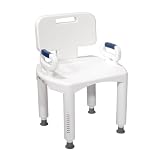
- Bathroom Bench: The Drive Medical Handicap Bathroom Bench provides safer and comfortable bathing support for seniors and adults with limited mobility, fitting most bathtub styles
- Quality Construction: Made from durable, high-quality plastic, this tub chair is designed for daily use, offering strength and longevity without the need for abrasive cleaners, ensuring worry-free maintenance
Medline Transfer Bench with Backrest
Ideal for getting in and out of the tub. Adjustable and supportive.

- HEAVY DUTY BATH AND SHOWER BENCH—For seniors and mobility-impaired individuals; use as tub transfer bench or bath seat for easy entry and exit; high-strength, rust-resistant aluminum frame; 400 lb. weight capacity; 11 lb.
- EASY ADJUSTABLE HEIGHT SETTINGS AND REVERSIBLE BACKREST – Easy push-button design for simple, custom seat height adjustment from 17.5-22”. Reversible backrest fits on either side of seat to accommodate any shower or tub.

Platinum Health Carousel Sliding Swivel Chair
Best for people who need extra help getting in or out of the shower.

- Professional grade sliding transfer shower bench, bath, and shower chair for inside shower. Effortless sliding and pivoting for safe, easy transfers in and out of the tub. Platinum health products are used in thousands of hospitals, nursing homes, and private homes by customers who value quality, safety, convenience, and comfort over price. Note: optional leg extension kit available for tubs with high ledge.
- Padded shower seat, back, and armrests. No more cold, slippery, hard plastic parts like old-style bath chairs; the well-made carousel provides warm-to-the-touch, comfortable, slip-resistant padding on all main components. The medical-grade, closed-cell molded polyurethane padding on this shower chair for the bathtub will not absorb any water and is easy to clean and disinfect.
Helpful Accessories for Extra Safety
These tools can make a big difference:
- Grab bars (securely mounted near the shower or tub)
- Handheld showerhead (for more control while seated)
- Non-slip bath mats (inside and outside the tub)
- Shower chair cushions (waterproof and soft)
- Bathroom safety rails (added stability when standing)
There are many other bathroom modifications that you can do to make your bathroom as safe as possible for aging in place!
Does Medicare Cover Shower Chairs?
Sometimes. If prescribed by a doctor, a shower chair may qualify as durable medical equipment (DME). Check with your provider. Many plans offer over-the-counter allowances or reimbursement options.
You can also find affordable options at:
- Amazon
- Walmart
- CVS and Walgreens
- Local medical supply stores
- Home improvement retailers like Lowe’s or Home Depot
- And don’t forget thrift stores like Goodwill or Salvation Army!
My neighbor is having knee surgery in a few weeks and he asked me where should he look for a rolling walker – I recommended Goodwill (which isn’t far from us) and he found exactly what he needed for $11.50!
FAQs
Final Thoughts
You don’t have to feel overwhelmed. Picking a shower chair is about keeping someone you love safe, or keeping yourself safe. And that’s a kind and thoughtful thing to do.
Whether you’re caring for an aging parent, recovering from surgery, or living with a disability, the right chair can help prevent falls and keep daily bathing manageable.
If you need help deciding, reach out to a local aging-in-place specialist, occupational therapist, or home health provider. You’re not alone in this, and you’re doing a great job.
