
 Aging in Place Directory Hub
High-tech monitoring for seniors uses smart home sensors, wearables, and remote alert systems to track safety, health, and activity at home.
While it promises independence and peace of mind, real-world studies show it often costs more, increases stress, and doesn’t always meet seniors’ emotional needs.
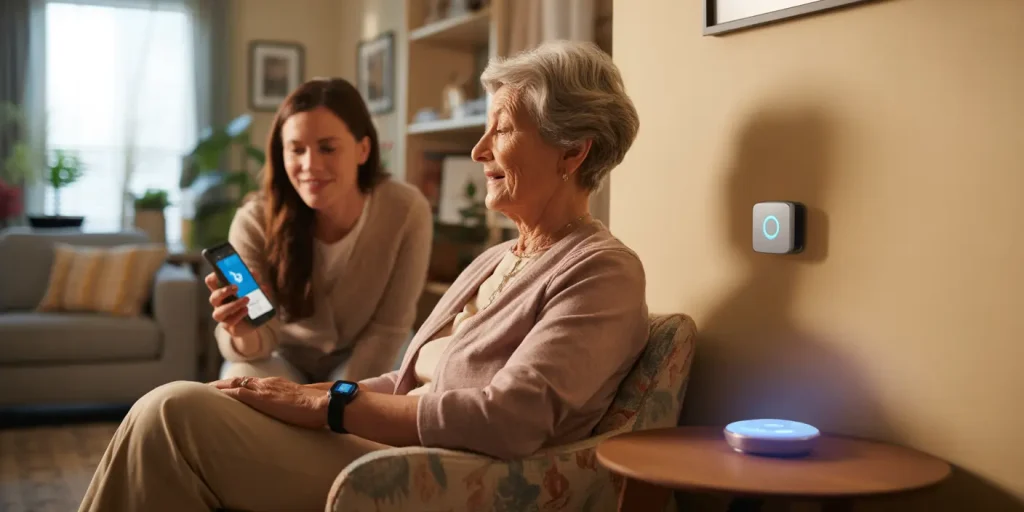
What Is High-Tech Monitoring for Seniors, and Does It Really Work?
Families hope it’s a simple fix. In reality, when this tech moves from the brochure to the living room, daily routines, privacy, and well-being can be disrupted in unexpected ways.
In this article, I’ll share the 6 surprising truths about high-tech monitoring for seniors, so you can make an informed, compassionate choice that truly supports independence.
Quick Rundown: 6 Surprising Truths About High-Tech Monitoring for Seniors
- Hidden Costs: Real-world trials found total care expenses often rise instead of fall.
- Low Adoption: Up to 98% of older adults decline these systems due to privacy and stigma concerns.
- Routine Disruption: “Passive” sensors often pressure users to change daily habits to avoid false alerts.
- False Alarms: Common triggers include pets, dropped linens, or slow, unrecognized falls.
- Emotional Gaps: Tech solves physical safety but ignores loneliness, the most painful risk of all.
- Anxiety Effects: Some users report feeling “watched,” leading to stress, sleep loss, or even removal of the system.
Let’s explore what these findings really mean, and how to choose technology that helps rather than harms.
Does High-Tech Monitoring Save Money or Cost More?
Answer: In most real-world studies, high-tech monitoring for seniors costs more overall.
A large UK study found that adding telecare systems increased total care costs, both in hardware and in staff time spent handling alerts. The “value per quality-adjusted life year” (QALY) reached £297,000, far beyond typical cost-effectiveness limits.
Why it matters: False alarms, system training, and human oversight all add hidden costs that most families never see coming.
Market snapshot:
- The global IoT in elderly care market was valued at about USD 45.97 billion in 2023 and projected to surpass USD 305.55 billion by 2032.
- A medical alert system subscription often runs $20-50/month, with fall detection add-ons of about $10/month.
✅ Action Tip: Before investing, ask vendors for total “system lifecycle costs,” including monthly fees, maintenance, WiFi requirements, and caregiver response protocols.
❓Are there any tax deductions or insurance programs that cover monitoring devices?
💬 Yes, sometimes. Some long-term care insurance plans, Medicaid waiver programs, or Veterans Affairs benefits may reimburse part of the cost. You can also claim durable medical equipment expenses as medical deductions if prescribed by a doctor. Always save receipts and check your local regulations for eligibility.
Why Do So Many Seniors Refuse Monitoring Devices?
Answer: Most older adults decline high-tech monitoring because they value privacy, independence, and dignity more than surveillance.
In one U.S. study, 98% of residents refused installation. The reasons?
- “I don’t want people in my business.”
- “That’s for frail people, I’m not there yet.”
- Fear of false EMS calls and door damage.
What this means: To work, tech must match identity and lifestyle, not just health needs.
✅ Action Tip: Frame devices as empowering tools, not “safety monitors.” Let the older adult decide what feels respectful.
❓How can I protect my loved one’s privacy when using monitoring technology?
💬 Choose systems that allow you to control data access, who sees what and when. Look for features like local storage (data kept on the device), encrypted transmissions, and user consent options. Avoid cameras unless absolutely necessary and use sensors that focus on movement or activity instead of constant video recording.
Is “Passive Monitoring” Really Passive?
Answer: Not at all. These systems often reshape how people live.
Many seniors report adjusting routines to avoid triggering alerts: skipping naps, rushing bathroom visits, or avoiding chairs where motion isn’t detected. Instead of freedom, users feel monitored and anxious.
Real Example: One woman stopped sleeping in her recliner because it falsely showed “no activity.”
✅ Action Tip: Choose systems with customizable alert thresholds and “pause” buttons, so the technology adapts to the person, not the other way around.
❓What’s the difference between wearable and non-wearable monitoring systems for seniors?
💬 Wearable systems (like pendants or smartwatches) travel with the person and usually detect falls or track vitals in real time. Non-wearable systems use sensors in the home, on doors, beds, or floors, to detect movement or inactivity. Most families combine both for better coverage and fewer false alarms.
How Common Are False Alarms in Senior Monitoring Systems?
Answer: Extremely common. One commercial fall detector triggered 83 false alarms out of 84 total alerts.
Typical causes include:
- Pets jumping on or off furniture
- Visitors sitting or playing on the floor
- Blankets or clothing dropped onto the ground
Because most fall-detection algorithms are trained on simulated falls by younger testers, real-life, slower falls often go undetected or misclassified.
✅ Action Tip: When testing devices, recreate realistic conditions, pets, furniture, dim lighting, to see how the system handles daily life before committing.
❓Can high-tech monitoring systems work without Wi-Fi?
💬 Some systems do, but many require a stable Wi-Fi or cellular connection. Cellular-based devices (like mobile medical alerts) include built-in 4G or LTE service and can still send alerts if Wi-Fi drops. Always check for battery backup and cellular options when choosing a system for reliable safety.
Is Technology Solving the Right Problem?
Answer: Not always. High-tech systems focus on physical safety, but many older adults struggle more with loneliness.
One resident purposely triggered her temperature alerts just to receive a check-in call, her only daily human contact.
The insight: Emotional safety matters as much as physical safety.
✅ Action Tip: Pair monitoring with social connection tools, like volunteer check-in calls, virtual companionship programs, or simple video chats.
Why Does Monitoring Sometimes Feel “Creepy” or Invasive?
Answer: For some, constant monitoring feels unsettling or even frightening.
One woman described her system as “a ghost watching me.” Others, including trauma survivors, asked for sensors to be removed. The flashing lights and quiet hums became reminders of being watched rather than protected.
✅ Action Tip: Respect emotional comfort. If sensors cause distress, remove or relocate them. A safe home should feel calm, not controlled.
What Types of High-Tech Monitoring Devices Exist?
Answer: There are several categories of devices, each with specific uses, features, and cost ranges.
Here are common types and key specs:
- Wearables (pendants, smartwatches): detect falls automatically, send GPS location.
- Bed/Chair Sensor Pads: pressure-sensitive pads trigger alert when weight is removed.
- Motion/Room Sensors: detect movement and inactivity in key zones (bathroom, hallway).
- Full Home Systems with Hub: connect multiple sensors and tie into caregiver apps.
- Medical Alert Subscriptions: at-home or mobile units with 24/7 monitoring service.
Cost and feature metrics to watch:
- Monthly subscription: $20-$50 typical, plus $5-$11 extra for fall detection.
- Equipment: $40-$300 depending on hardware, sensor type, wireless range.
- Sensor coverage: motion sensors ~800-1000 sq ft per device.
✅ Action Tip: Use a 2-column checklist when comparing vendors to assess accuracy, cost, privacy, and trial options.
❓How long does it take to install a full home monitoring system?
💬 Most DIY systems install in under an hour with adhesive mounts and a smartphone app. Professional installations can take 1–3 hours depending on the number of sensors. For best results, test every sensor after setup and run a 24-hour trial to confirm it aligns with your loved one’s normal routine.
Why Is This Market Growing So Quickly?
Answer: The “high-tech monitoring for seniors” market is booming because of aging demographics, rising home-care demand, and technological advances.
- Global IoT in elderly-care valued ~USD 45.97 billion in 2023, projected to exceed USD 305.55 billion by 2032.
- Smart home healthcare expected to reach USD 284.86 billion by 2034.
✅ Action Tip: Include a short “Why now” paragraph explaining the market growth so readers understand urgency and relevance.
How Can Families Choose Tech That Truly Helps?
Answer: Combine human connection, practical design, and flexible tech, so high-tech monitoring for seniors truly supports life, not disrupt it.
Here’s what I recommend:
- Start with a conversation: Ask what would make your loved one feel safe, not just be safe.
- Trial and track: Test for 30 days. Note stress levels, alerts, comfort.
- Mix low-tech with high-touch: Night lights, grab bars, and daily check-in texts can do more than sensors alone.
- Plan responsibility: Who updates the app? Who checks alerts? Who handles WiFi issues?
- Customise routines: Set sensor thresholds that fit their schedule, allow for naps, slower movement, pets.
- Check privacy & autonomy: Ensure data access is shared with consent and the older adult keeps decision-making power.
- Integrate with smart home gear (optional): Lights that turn on when motion is detected or doors that lock after hours.
- Clear exit plan: If the system causes stress, remove it without guilt.
Final Reflection: The Human Side of “Smart” Care
Technology can support independence, but only when it fits the rhythm of real life. The truth about high-tech monitoring for seniors is simple: it’s not just about detecting danger, it’s about preserving dignity.
Before you buy, pause and ask:
“Will this make life easier, or just busier?”
When we choose technology that listens first, supports freedom, and builds connection, we turn “smart homes” into truly supportive homes.
If you’re weighing options and want a second pair of eyes, I’m here to help. We’ll focus on what matters most to your family: safety, dignity, and a life that still feels like yours.
