
 Aging in Place Directory Hub
Yes, grab bars can be safely installed without studs, but only when you use the right hardware. Toggle bolts, snap toggles, and hollow-wall anchors can support significant weight in drywall. Adhesive grab bars work for lighter use. The key factors are wall thickness, bar placement, and whether the method can hold at least 250 pounds of force.
A few years ago, a woman I’ll call Margaret called me in a panic. Her 80-year-old mother had slipped in the shower, and the family wanted grab bars installed immediately. The only problem? Their bathroom walls had no studs where they needed them most.
That situation is more common than you might think. Most bathroom walls don’t have studs exactly where grab bars need to go. And for families trying to keep a loved one safe at home, waiting isn’t always an option.
Here’s the good news: you don’t always need a stud. With the right approach, you can install a grab bar that’s just as secure, and potentially life-saving. Read on, and I’ll walk you through exactly what works and what doesn’t.
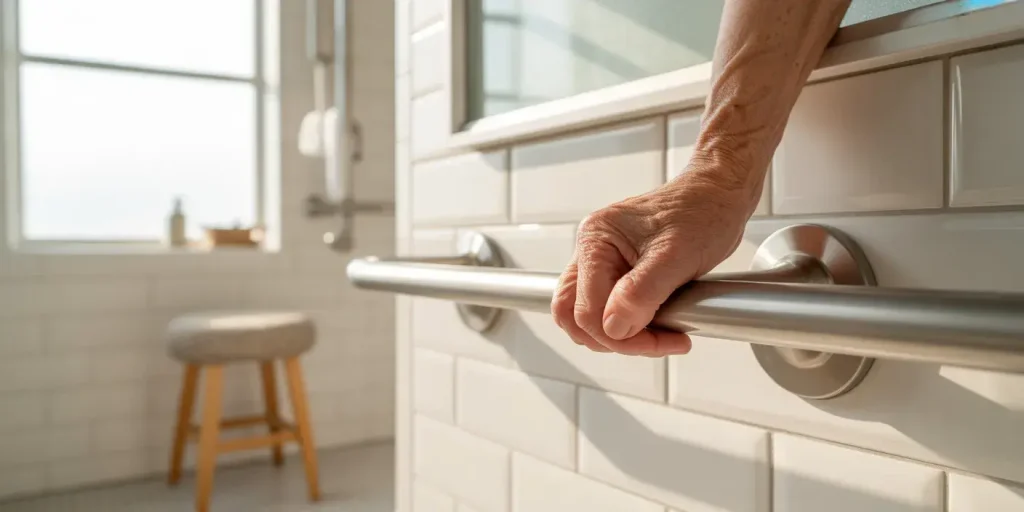
Why This Is Such a Common Problem
Bathroom walls are rarely built with grab bar installation in mind. Studs are typically spaced 16 or 24 inches apart, and the spots where bars are most needed, beside the toilet, inside the shower, next to the tub, often fall between studs.
This happens because:
- Builders follow standard framing patterns without considering future accessibility needs
- Tile surrounds and prefab shower units are installed over hollow-wall spaces
- Older homes may have irregular stud spacing that’s hard to predict
- Remodeling work can shift or block original stud positions
So when a family member needs a grab bar right away, there may simply be no stud where it needs to go. That doesn’t mean you’re out of options.
Signs You May Be Dealing With a Hollow Wall
Before choosing your installation method, it helps to confirm what kind of wall you’re working with. Here’s what to look for:
- A hollow sound when you knock — drywall over a cavity sounds noticeably different from a solid stud
- A stud finder that shows no hits in the target area
- Tile over drywall — common in older bathrooms where the tile is glued or mortared to standard drywall
- Prefab shower surrounds — fiberglass or acrylic units almost always have hollow backing
- Walls thinner than 1 inch when you remove a outlet plate to peek inside
Knowing your wall type before you buy hardware will save you time, money, and frustration.
What You Should Do: Your Best Installation Options
There are four proven methods for installing grab bars without studs. Which one is right for you depends on your wall type, how much weight the bar needs to support, and your comfort level with a drill.
1. Snap Toggle Bolts (also called SnapToggles or Toggler anchors)
This is my top recommendation for most situations. Snap toggles work by deploying a metal bracket behind the wall that spreads the load over a large area. A single snap toggle can hold 200–300+ pounds, depending on the brand and wall thickness. For a grab bar with two mounting points, you’re looking at serious holding power, enough to support a fall.
Here are some toggle bolts you can look at.
2. Hollow-Wall Expansion Anchors
These work by expanding behind the drywall when tightened. They’re widely available, easy to install, and work well in standard 1/2-inch or 5/8-inch drywall. Look for anchors rated for at least 100 pounds each in shear load.
Look for some hollow-wall expansion anchors here.
3. Backing Plates or Plywood Mounting Panels
If you’re doing a bathroom renovation or have access behind the wall, this is the gold standard. A piece of 3/4-inch plywood is secured between studs, and the grab bar is then screwed into the plywood. The plywood becomes the backing, distributing the load evenly. Many aging-in-place professionals install backing panels during any bathroom remodel, even if bars aren’t needed yet.
4. Suction Grab Bars (for light use only)
Several manufacturers now offer grab bars that mount with industrial adhesive rather than screws. These are easy to install and require no drilling. However, they are best suited for light steadying use, not for catching a full fall. If the person using the bar has significant balance issues or weakness, I don’t recommend relying on adhesive alone.
A quick story: One of my clients, a retired teacher named Harold, lived in a condo with tile walls and no stud access. His contractor had already told him grab bars “couldn’t be installed.”
I referred him to a CAPS-certified contractor who used snap toggle bolts behind the tile and installed a hospital-grade bar in two hours. Harold still uses it every single day. The right professional makes all the difference.
Tools and Products That Make It Possible
Here’s what you’ll need for a successful no-stud installation:
- Snap toggle anchors — look for Toggler brand SnapToggles or similar; available at most hardware stores
- A drill with the correct bit size — snap toggles require a specific hole diameter (usually 1/2 inch); always check the packaging
- A stud finder — even if there’s no stud in the right spot, knowing where studs are helps you plan
- A grab bar rated for 250+ lbs — look for bars meeting ANSI/ADA standards
- A CAPS-certified contractor — if you’re not confident in your DIY skills, hire someone trained in aging-in-place installations
When to Worry: Red Flags That Mean You Need a Professional
Most no-stud installations can be completed safely by a confident DIYer or handy family member. But there are situations where I strongly recommend calling a professional:
- The wall is made of ceramic tile over drywall, drilling tile requires special bits and technique
- The person using the bar weighs more than 250 lbs or has significant fall risk
- The wall feels soft, crumbly, or shows signs of water damage
- You’ve tried an anchor and it pulls out or wiggles after installation
- The bathroom is used by someone with dementia who may grab the bar with sudden, unpredictable force
Water-damaged drywall is especially risky. It may look fine on the surface but offer very little holding power behind the wall. If you notice any soft spots, discoloration, or mold around where the bar needs to go, address the moisture problem first.
If you’re unsure, the cost of a professional installation is a fraction of the cost, financial and emotional, of a fall.
Conclusion
Not long ago, I worked with a family who had been putting off installing grab bars for months. They kept hitting the same wall, no pun intended. No studs where they needed them, and no idea what to do next.
Once they learned about snap toggles and found a CAPS-certified contractor, the bars were up in an afternoon. Their mother cried when she got into the shower safely for the first time in months.
That’s the lesson I want you to take from this article. A missing stud is not a dead end. It’s just a problem with a solution you may not have known about yet.
You have the information now. You know which anchors work, which walls need professional help, and where to find someone qualified to do the job right. The only thing left is to take that first step, grab a stud finder, knock on the wall, and get started.
Your loved one’s safety is worth it. And safer bathrooms are closer than most families think.
Frequently Asked Questions
How much weight can you hang on drywall without studs?
The amount of weight drywall can hold without studs depends on the type of anchor you use. A standard plastic expansion anchor holds around 20–30 pounds, while a snap toggle or toggle bolt can hold 50–100 pounds or more per anchor point. Bare drywall with just a screw and no anchor should only hold about 5–10 pounds, not much more than a small picture frame. Always check the load rating on your anchor packaging before hanging anything heavy.
What is the average cost of installing grab bars?
The average cost to install grab bars professionally ranges from $100 to $400 per bar, including both the bar itself and labor. The grab bar alone typically costs $20 to $150 depending on the style, finish, and weight rating. Labor usually runs $75 to $200 per bar, though a CAPS-certified contractor may charge more, and is often worth it for proper placement and secure installation. If you’re installing multiple bars at once, many contractors offer a lower per-bar rate. DIY installation can bring the cost down significantly, but only if you’re comfortable with a drill and confident in your anchor choice.
Are grab bars covered by Medicare?
Medicare generally does not cover grab bars because they are considered home modifications rather than durable medical equipment. However, some Medicare Advantage (Part C) plans do include a home safety benefit that may cover them, so it’s worth calling your plan directly to ask. Other potential funding sources include Medicaid waiver programs, your state’s Area Agency on Aging, VA benefits for veterans, and local nonprofit organizations that assist seniors with home safety modifications.
