
 Aging in Place Directory Hub
When people ask me, “Why is there a grab bar behind the toilet?” the answer is simple: it’s there to protect you.
The rear wall horizontal grab bar provides stability when you sit, stand, or reposition yourself, and it can prevent dangerous falls in one of the riskiest spots in the home.
Quick Rundown
- A rear wall grab bar reduces falls during sit-to-stand transfers
- ADA Standards require the rear bar to be at least 36 inches long and 33–36 inches above finished floor
- The side wall horizontal bar works with the rear bar to create safe two-point support
- Bars must support at least 250 pounds and have 1.25–1.5 inch diameter grips
- Proper anchoring into studs or reinforced blocking is essential
I know bathroom safety can feel intimidating, but I’ve seen firsthand how one well-placed grab bar can restore independence and dignity. Let’s go step by step.
The Hidden Risks of Toilet Transfers
Most people think of the shower when they picture falls, but the water closet is just as dangerous.
Standing up or sitting down puts stress on hips and knees. Add arthritis, balance problems, or Parkinson’s disease, and a simple transfer can cause a fall.
One of my patients insisted she didn’t need any support. She slipped sideways while adjusting her clothes and hit the floor.
Thankfully, she wasn’t seriously injured, but her confidence was gone. After installing a rear grab bar at the proper height, she said, “I finally feel safe again in my own bathroom.”
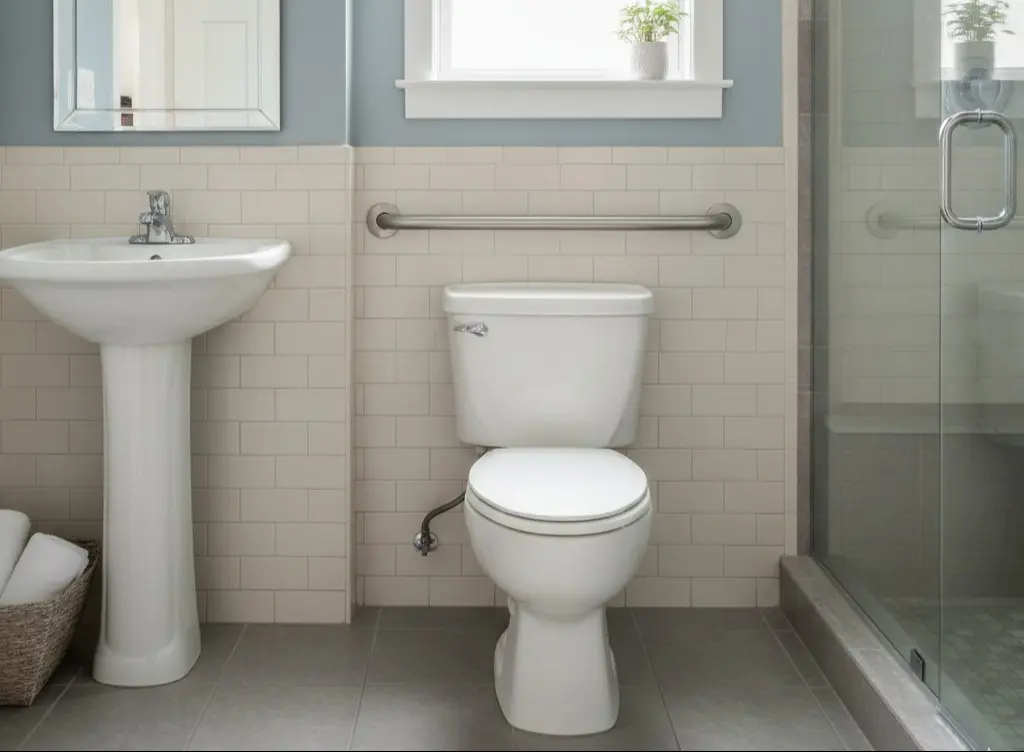
Why Is There a Grab Bar Behind the Toilet?
The rear wall bar isn’t just about code compliance. It solves real-world problems:
- Offers stability whether you approach from the left side or open side of the stall.
- Helps with scooting back on the seat and balance recovery when clothing shifts your posture.
- Creates a steady grip point when side wall support is out of reach.
- Works together with the side wall bar for safer sit-to-stand transfers.
ADA Standards and Placement Requirements
According to the 2010 ADA Standards (Section 604.5.2) and updated 2025 guidance, here’s what matters:
- Rear grab bar length: at least 36 inches long, extending 12 inches from the centerline of the water closet toward the side wall and 24 inches toward the open side.
- Side grab bar length: at least 42 inches, starting 12 inches from the rear wall and extending at least 54 inches forward.
- Height: both bars should be 33–36 inches above the finished floor.
- Clearance: keep at least 1.5 inches from the wall surface for easy grasping.
- Flush controls: position them so they don’t interfere with grab bar placement.
- Exceptions: if space is limited, a 24-inch centered bar is allowed.
These numbers may seem technical, but they are designed around how the body moves during transfers.
For comprehensive guidance on strategic placement throughout your entire bathroom, learn where to install grab bars in your bathroom.
Real Benefits for Seniors and Caregivers
Grab bars are more than just metal rails. They are about independence, safety, and peace of mind.
- For seniors: gives you the confidence to manage toileting without constant help.
- For caregivers: consistent placement makes guiding a loved one safer and reduces your own risk of injury.
I once worked with a gentleman who thought bars looked “too medical.” His daughter pushed for installation anyway.
A week later he admitted, “This was the best decision. I feel safer and I don’t need her help every time anymore.”
Technical Specs You Should Know
When choosing grab bars, make sure they meet ADA performance standards:
- Weight capacity: must support at least 250 pounds of force.
- Diameter: 1.25 to 1.5 inches for a comfortable grip.
- Non-rotation: bars must not spin within their fittings.
- Surface texture: peened or knurled finishes add slip resistance.
- Ends: bars should return to the wall so sleeves or bags don’t catch.
How to Install a Rear Grab Bar Correctly
- Anchor into studs or reinforced blocking during construction. If studs don’t align, use heavy-duty wall anchors rated for ADA grab bars.
- Avoid suction grab bars for toilet transfers; they are not reliable.
- Measure from the finished floor to the top of the gripping surface (33–36 inches).
- Plan for the future: even if you don’t install today, add wall reinforcement now so you can easily add bars later.
If you’re ready to take action, our detailed step-by-step guide for installing grab bars in bathrooms.
Alternatives and Complements
Sometimes a full rear bar isn’t possible. Here are smart options:
- L-shaped grab bars combine vertical and horizontal grips for added leverage.
- Fold-down swing-away bars are helpful for freestanding toilets or narrow rooms.
- Vertical helper bars mounted above the side bar (often 18 inches long) improve reach.
- Raised toilet seats reduce strain, especially when paired with a rear bar.
- Diagonal bars can be easier to grip for those with arthritis.
Beyond the standard rear wall bar, explore 7 popular types of grab bars.
The Bigger Picture: Fall Prevention and Aging in Place
Bathrooms are the most common location for home falls. Yet surveys show that more than 60% of households needing grab bars still don’t have them installed. This means millions of older adults are at unnecessary risk.
Grab bars are just one component of comprehensive bathroom safety for older adults.
Universal design and ADA-inspired bathroom layouts are becoming standard in new homes. Builders are now reinforcing bathroom walls as part of code so grab bars can be added at any time.
This shift reflects a future where grab bars are simply part of smart design, not a medical “add-on.”
Conclusion
So, why is there a grab bar behind the toilet? Because it prevents falls, supports independence, and protects dignity. It’s not just a public restroom requirement, it belongs in every safe home.
If you or your loved one struggles with balance, don’t wait for an accident. Install a secure rear wall grab bar now, or talk with a CAPS specialist about the best setup for your bathroom. A small change today can protect your health and confidence tomorrow.
Need professional installation help? Find out who installs grab bars for seniors.
👉 Next Step: Walk into your bathroom. Ask yourself, “If I lose my balance here, what could I grab?” If the answer is “nothing,” it’s time to install a rear grab bar.
