
 Aging in Place Directory Hub
Helping your aging parents stay at home safely starts with practical steps that protect their independence, comfort, and dignity. The key is knowing what to prioritize, home safety, daily function, emotional connection, and future planning, so they can thrive where they feel most at peace.
When I helped my own mother remain in her home, I learned that safety and independence don’t happen by luck, they happen by plan. It took a mix of home adjustments, simple routines, and compassionate conversations to make it work.
Quick Rundown: How To Help Your Aging Parents Stay Safely at Home
- Start with Safety: Prioritize fall prevention, balance, and nighttime navigation.
- Plan Small Upgrades: Simple bathroom and lighting updates prevent most accidents.
- Use Smart Tools: Home sensors, voice assistants, and stove shut-offs add security without invading privacy.
- Share the Load: Build a support network before caregiver stress takes over.
- Protect Finances: Set alerts, trusted contacts, and keep legal paperwork organized.
- Stay Connected: Social engagement supports mental health and memory.
Before diving into details, review the basics of aging in place and how it works to understand what true independence at home really means.
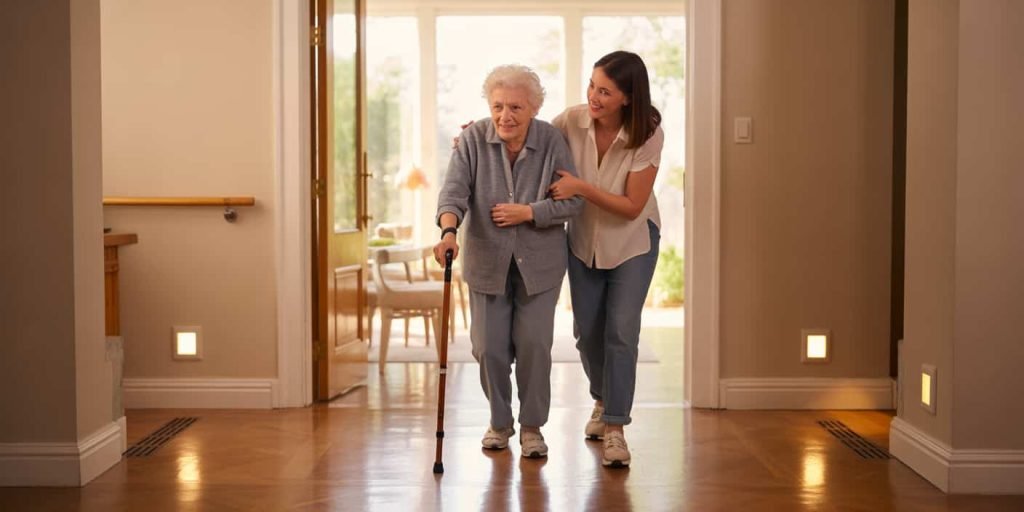
What’s the First Step to Helping Aging Parents Stay at Home?
Start with a complete safety and function assessment of your parent’s home and daily habits.
Observe how they move, manage daily tasks, and react to obstacles. Document everything that affects balance, vision, and confidence.
Action Steps You Can Take Now:
- Walk the same route they use at night from bed → bathroom → kitchen. Record any dim areas or trip hazards.
- Perform a 10-second sit-to-stand test and note if they struggle to rise.
- Use an Aging in Place Checklist from this guide to track safety upgrades room by room.
- If cognition or memory seems affected, note confusion, forgotten tasks, or medication mishandling, these are early red flags.
🟢 Pro Tip: Schedule an annual aging-in-place assessment with a certified professional who can identify hidden hazards and prioritize improvements that match your parent’s needs.
When I did this with my dad, we discovered that his main fall risk was the dark hallway, not the stairs. A $25 motion-light fixed it instantly.
❓How can I tell if my parent is truly safe living alone at home?
💬 Start with a safety assessment that looks at balance, mobility, vision, and daily tasks. If they struggle with walking, bathing, or remembering medications, it’s time to add home modifications or support. A certified aging-in-place specialist or occupational therapist can provide a professional evaluation.
What Home Modifications Make the Biggest Difference?
Focus your energy on the bathroom, lighting, and pathways, the top three zones for injuries.
Small changes create big results. Evidence from fall-prevention studies shows that targeted upgrades can cut injuries by over 50%.
Top Priorities:
- Bathroom: Install grab bars near the toilet and shower, add a transfer bench or walk-in tub, use a hand-held shower head.
- Lighting: Add motion lights, night-lights, and bright LED bulbs that simulate daylight.
- Pathways: Clear all clutter, secure rugs, and ensure 36 inches of walking space for mobility aids.
If you’re unsure where to start, book an aging-in-place home assessment to identify the highest-impact upgrades.
💡 Extra Tip: Pair home safety with emergency preparedness, make sure smoke detectors, fire extinguishers, and backup lighting work. A reliable emergency plan for seniors helps everyone act fast in a crisis.
❓How can I help my aging parent stay active without risking injury?
💬 Encourage safe movement every day, short walks, chair yoga, or light stretching are excellent choices. Avoid sudden changes in routine and add supportive shoes or mobility aids if balance is an issue. Even 10 minutes of gentle movement twice a day improves strength and confidence.
How Can Technology Help Without Invading Privacy?
Choose privacy-friendly smart devices that focus on safety, not surveillance.
Modern home-safety tech now includes non-wearable radar sensors and AI-based alert systems that detect falls or leaks without using cameras.
Try These:
- Automatic stove shut-off devices for memory safety.
- Motion floor sensors in bathrooms and hallways.
- Smart door alerts that notify you of wandering or unexpected exits.
- Here are more amazing products that can help to make a home safer!
If you’re planning future upgrades, explore this remodeling guide for aging adults to see how smart-home integration can evolve with your parent’s needs.
When my mother refused her medical alert pendant, we replaced it with a small wall-mounted sensor unit. She felt independent again, and I felt reassured.
How Do I Build a Reliable Support Network?
Layer your help system with professionals, community resources, and family so no one burns out.
Support networks prevent isolation and reduce emergencies.
Where to Find Help:
- Contact your Area Agency on Aging for vetted in-home programs.
- Apply to Meals on Wheels or volunteer driver networks.
- Join a Village Network, neighborhood groups offering help with chores and errands.
- Look into PACE (Program of All-Inclusive Care for the Elderly) for medical and daily-living support.
When I joined a caregiver group, I met volunteers who visited Dad weekly, giving me a needed break.
If your home feels cluttered or unsafe, start small, decluttering early makes it easier to organize care tasks and keep mobility paths open.
How Do I Talk to a Parent Who Resists Help?
Use calm, respectful communication that reinforces control, not loss.
Resistance is common. The key is empathy, not persuasion. Try:
- Using “I” statements: “I worry about your safety at night and want to add a light,” instead of “You can’t see in the dark.”
- Framing help as independence: “Grab bars help you keep your freedom.”
- Involving them in decisions; ask what changes feel comfortable.
A short family meeting once a month prevents misunderstandings and keeps communication open.
❓How do I handle family disagreements about caring for our parents at home?
💬 Schedule a calm family meeting focused on your parent’s goals and safety, not on blame or comparison. Use a shared care plan to document responsibilities and decisions. If conflicts continue, consider inviting a neutral third party such as a care manager or social worker to help guide the discussion.
How Can I Prevent Burnout While Caring for My Parents?
Plan rest as seriously as you plan care.
Caregiver stress can cause illness, mistakes, and resentment.
- Use respite care one day a week.
- Automate grocery and pharmacy deliveries.
- Schedule a backup caregiver for emergencies.
🟢 Measure Your Load: If you provide more than 20 hours a week of hands-on care, you are at risk for burnout.
Create a shared online care calendar to divide tasks by category (medical, meals, errands).
❓What financial help is available for family caregivers?
💬 Some states offer caregiver stipends or tax credits for families providing in-home care. Contact your local Area Agency on Aging or visit BenefitsCheckUp.org to see available programs. Always keep receipts and records for medical or caregiving expenses for tax purposes.
How Can I Help Protect My Parents’ Money and Identity?
Prevention is the best financial protection.
Older adults are prime targets for fraud, so build protection into daily routines:
- Enable bank transaction alerts and two-step verification.
- Add a trusted contact at each financial institution.
- Post reminders by the phone about scam scripts (“Hang up and call back”).
- Keep copies of insurance, powers of attorney, and medical records in one safe folder.
Consider adding a section to your binder for an emergency preparedness plan so you can access everything quickly during a crisis.
How Can I Support Parents with Memory or Cognitive Changes?
Simplify routines, label spaces, and create visual reminders to reduce confusion.
If your parent shows mild cognitive decline:
- Use large-print labels on doors and drawers.
- Keep pathways consistent, avoid rearranging furniture.
- Install stove timers and water shut-off sensors.
- Maintain a daily whiteboard schedule in the kitchen.
These small cues reduce anxiety and help maintain independence longer.
❓What’s the best way to manage medications for an aging parent at home?
💬 Use a weekly pill organizer with morning and evening sections, set phone or smart-speaker reminders, and review medications with their pharmacist every six months. For higher safety, consider automatic dispensers that lock until it’s time for the next dose.
When Is It Time to Consider That Home Is No Longer Safe?
Watch for warning signs that care needs exceed what home can provide.
Key signals include:
- Repeated falls or injuries.
- Missed medications or unpaid bills.
- Wandering or nighttime confusion.
- Rapid weight loss or poor hygiene.
- Caregiver exhaustion or sleep deprivation.
If multiple warning signs appear, discuss care-home or assisted-living options before a crisis forces the decision. Framing it as a “safety plan” keeps the tone positive.
How Do I Keep My Parents Emotionally and Socially Engaged at Home?
Connection is medicine, schedule interaction as part of their health routine.
Ideas that boost mental and emotional well-being:
- Weekly family video calls or community meet-ups.
- Volunteer roles that fit their abilities (phone check-ins, craft donations).
- Encourage brain games and light exercise groups.
When my mom began virtual church meetings, her mood improved within weeks. Loneliness fades when purpose returns.
What’s a Simple 90-Day Plan to Keep Aging Parents Safe at Home?
Follow a three-month timeline for measurable progress.
Month 1 – Safety Audit
- Perform a room-by-room inspection with the Aging in Place Checklist.
- Install grab bars, motion lights, and non-slip mats.
Month 2 – Build Support
- Contact local agencies and apply for support services.
- Recruit family help and delegate tasks.
Month 3 – Sustain and Adjust
- Add smart sensors and test alerts monthly.
- Review mobility and energy levels every two weeks.
🟢 Financial Tip: Explore state programs that offer tax credits or stipends to family caregivers. Check your local aging council for eligibility.
This 90-day method replaces overwhelm with clear milestones.
Final Thoughts
Helping aging parents stay at home safely is one of the most loving gifts we can give. True independence doesn’t mean doing everything alone, it means building systems that keep them safe, connected, and fulfilled.
Start small today. A brighter hallway, a trusted helper, or a clear care plan can make all the difference tomorrow.
