
 Aging in Place Directory Hub
Keeping your bathroom safe should never come down to guesswork. If you’re trying to make your home safer for aging in place or caring for an elderly parent, avoiding grab bar installation mistakes is key.
I’ve seen too many families make what seemed like small mistakes when installing shower grab bars, only to find out later just how dangerous those mistakes could be. I’m here to help you avoid that. 🛠️
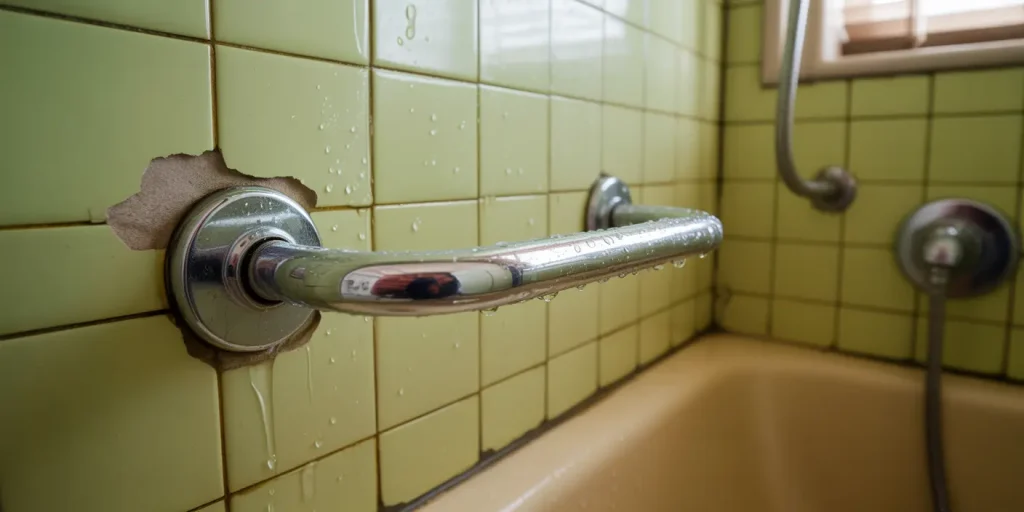
Why Grab Bars Matter in the Shower
The shower is one of the most dangerous places in the home for older adults. Wet, slippery surfaces and limited mobility can quickly lead to falls. That’s why properly installed grab bars are not just helpful, they’re essential for aging in place.
A properly placed grab bar provides stable support when getting in or out of the shower, adjusting your position, or regaining balance. But a poorly installed one can give a false sense of safety.
Mistake #1: Mounting into Drywall Alone
One of the most common installation mistakes is attaching grab bars directly into drywall. Drywall can’t hold a person’s weight during a slip.
What to do instead:
- Use a deep-scan stud finder to locate wall studs behind the shower surface.
- If a stud isn’t in the right location, install wood blocking or use toggle bolts or Delta Secure Mount anchors rated for grab bars.
- For fiberglass or hollow walls, use a mounting plate or weight-bearing anchors.
Mistake #2: Using the Wrong Hardware
Standard screws and anchors are not enough. Shower grab bars must support at least 250 pounds of force.
Use proper hardware rated for grab bars:
- Stainless steel screws
- Heavy-duty, weight-rated anchors
- Grab bars with ADA compliance markings
- Bar diameter of 1.25 to 1.5 inches for safe gripping
Recommended height range:
- 33 to 36 inches from the floor, adjusted to the user’s needs
Mistake #3: Installing the Bar at the Wrong Height
There is no one-size-fits-all height for grab bars. I once worked with a gentleman who had his bar installed too high, it was unreachable from his shower seat, making it useless. 🪑
Recommended height range:
- 33 to 36 inches from the floor, adjusted to the user’s needs
Bar length tip: Most horizontal bars range from 24 to 32 inches long. Choose a length that fits both the user’s reach and the wall space.
DIY tip: Have the person stand or sit where they bathe and mark where their hand naturally reaches.
Mistake #4: Ignoring the User’s Daily Habits
Each person moves differently in the shower. When I assess grab bar placement, I always ask about daily habits.
Ask questions like:
- Do you use a shower bench?
- Which hand do you use most?
- Where do you reach to turn on the water or grab soap?
- How do you step in and out of the tub?
The grab bar should support the user’s natural movements.
Mistake #5: DIY Without Experience
Installing a grab bar isn’t like mounting a towel rod. You’re dealing with tile, potential plumbing, and the need for secure, weight-bearing attachments.
If you’re drilling into tile:
- Use a diamond or masonry bit
- Drill slowly with water to prevent cracking
- Seal the escutcheon plate with silicone caulk to prevent water damage
If you’re unsure, call a Certified Aging-in-Place Specialist (CAPS) who understands universal design and grab bar code requirements.
Mistake #6: Choosing the Wrong Grab Bar
Not all bars are created for safety. Some are decorative, too smooth, or not rated for body weight.
Choose bars that are:
- ADA-compliant
- Textured or knurled for grip
- At least 250 lb weight-rated
- Rust- and corrosion-resistant
Avoid suction cup grab bars unless they are rated for temporary use and inspected regularly.
Mistake #7: Not Testing for Stability
Even a good installation can go wrong if you don’t test it. A loose grab bar can fail under pressure.
How to test properly:
- Grip and pull hard in multiple directions
- Look for movement or sound
- Retest every month or after cleaning
Mistake #8: Overlooking Nearby Fixtures
Grab bars need space. Avoid placing them near showerheads, soap dishes, or glass doors where your hand can’t get a full grip.
Make sure there’s at least 1.5 inches of clearance between the wall and the bar, and ensure no obstructions are in the way.
Bonus: One Grab Bar Isn’t Enough
I always recommend installing multiple grab bars for full safety:
- Vertical bar at the entrance for stepping in
- Horizontal bar on the back wall for balance while standing
- Angled bar near the shower seat for pushing up or adjusting
Installation tip:
- Vertical bars: chest to shoulder height
- Horizontal bars: hip to waist level, depending on reach
Pro Tips & Technical Specs
To help you get everything right, here are a few more specifics:
- ADA guidelines require bars to support 250 lbs or more
- Bars should have a gripping surface diameter between 1.25 and 1.5 inches
- Mounting surface must support sustained load force
- Avoid mounting over grout lines if possible when drilling tile
Step-by-Step & Technical Specs
To help you get everything right, here’s a quick breakdown of technical details and expert tips often searched by DIYers and caregivers:
- ADA guidelines require bars to support 250 lbs or more
- Bars should have a gripping surface diameter between 1.25 and 1.5 inches, which helps ensure a secure grip and ADA compliance
- Mounting surface must support sustained load force (at least 250 pounds), especially during slips or transfers
- Avoid mounting over grout lines if possible when drilling tile
Helpful Resources and Related Guides
If you’re making other home safety updates, check out these resources to continue improving your space:
- Checklist: The Ultimate Guide To Bathroom Grab Bars
- How Many Grab Bars Should A Shower Have For Safety?
- Find a Certified Aging-in-Place Specialist Near You
These links can help you plan with more confidence and find trusted professionals in your area.
Final Thoughts
I know this can feel like a lot to take in. But getting it right matters. A properly installed grab bar can prevent a fall and give peace of mind to you and your loved ones.
If you’re not sure how to get started, look for a Certified Aging-in-Place Specialist. You can find experienced pros in your area through AgingInPlaceDirectoryHub.com.
You’ve got this, and you’re not alone. Let’s make the bathroom safer, one bar at a time.
