
 Aging in Place Directory Hub
The Ting Fire Prevention Sensor is one of the best electrical fire safety tools available for seniors aging in place. It plugs into any standard outlet and monitors your home’s wiring 24/7 for hidden electrical hazards called “arcing”, the sparking inside walls that causes most home electrical fires. It takes two minutes to set up and costs about $100 plus $49 per year after the first year.
My neighbor Margaret called me last spring, shaken. An electrician had just pulled a foot of charred wiring from inside her wall. She had no idea anything was wrong. Her lights worked. Her outlets worked. Nothing looked dangerous.
But a hidden electrical fault had been quietly burning for who knows how long, and she had no way of knowing it was there.
That situation is more common than most people realize. And for seniors living alone, it is especially frightening. You cannot see inside your walls. You cannot smell an arc fault before it becomes a flame. By the time a smoke detector goes off, the fire has already started.
That is exactly what the Ting Fire Prevention Sensor was designed to prevent. Keep reading and I will explain exactly how it works, who needs it most, and how to decide if it is right for your home.

What Is the Ting Fire Prevention Sensor and How Does It Work?
The Ting sensor is a small plug-in device that monitors your home’s electrical system for the very earliest signs of fire danger. It does not just detect smoke after a fire starts. It detects the conditions that cause fires, before any flames appear.
Here is how it works. You plug the sensor into any standard wall outlet in a quiet part of your home. It connects to your Wi-Fi and immediately begins monitoring. The device takes 30 million electrical measurements per second, looking for tiny abnormal patterns in your home’s voltage.
Those abnormal patterns are called electrical arcing. Arcing is what happens when electricity jumps between damaged, loose, or faulty wires and connections.
It is the hidden cause behind most electrical fires, and it often happens completely silently inside your walls for months before a fire breaks out. A standard smoke alarm cannot detect this. The Ting sensor can.
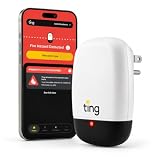
- 1 YEAR FIRE PREVENTION SERVICE: World-class Ting Fire Safety Team leads you through isolation and mitigation of Ting-identified hazards. Includes the Ting sensor, Ting smartphone app, 1 year of Ting fire prevention service ($49 annually thereafter), and $1,000 repair credit for Ting-identified electrical hazards.
- DIY EASY SETUP: Just takes two minutes. A single sensor monitors your in-home wiring, plugged-in devices, and incoming power. Simply requires WiFi, a smartphone, and open outlet.
- REAL-TIME ALERTS: Ting App provides 24/7 alerts for hazards, power outages, and more.
Why Are Seniors at Higher Risk for Electrical Fires?
Seniors face a much greater danger from home fires than younger adults do, and the numbers are sobering. According to the U.S. Fire Administration, adults 65 and older are 2.5 times more likely to die in a fire than the general population. By age 75, that risk nearly quadruples.
There are several reasons why this is true.
- Older homes are a major factor. Many seniors have lived in their homes for decades, and older wiring was simply not designed to handle the demands of today’s appliances. Homes more than 40 years old are three times more likely to experience an electrical fire than newer homes. Wiring degrades over time. Connections loosen. Insulation cracks.
- Cognitive changes also increase risk. A person with memory loss may not remember to check whether an appliance was turned off.
- Physical changes such as slower reaction times, reduced sense of smell, hearing loss, and medication side effects can all delay a senior’s ability to notice or respond to fire danger. Also, someone with mobility issues may not be able to escape quickly.
And here is the part that makes electrical fires particularly dangerous for everyone: most of the hazard builds silently, long before any sign appears that you would ever notice on your own.
What Warning Signs Suggest You May Have an Electrical Hazard at Home?
The honest answer is that most electrical hazards give you very little warning. That is what makes them so dangerous. However, there are some signs worth watching for.
Look and listen for these warning signs:
- Lights that flicker or dim without explanation
- Outlets or switch plates that feel warm to the touch
- A burning smell near an outlet, appliance, or electrical panel
- Breakers that trip repeatedly for no clear reason
- Discoloration or scorch marks around outlets or plugs
- Appliances that stop working or behave strangely
- Extension cords or power strips that feel hot
If you or your loved one notices any of these signs, do not ignore them. Call a licensed electrician right away. But here is the difficult truth: many electrical arc faults produce none of these signs at all.
They build silently, deep inside walls and wiring that you cannot see or touch. That is exactly why a monitoring device like Ting matters so much.
What Does the Ting Sensor Actually Include?
When you purchase the Ting sensor, you are not just buying a piece of hardware. You are getting a complete fire prevention service.
Here is what comes with it:
- The physical sensor — a small plug-in device that goes into any standard wall outlet
- The Ting smartphone app — required to set up the sensor and receive alerts
- One year of 24/7 monitoring service — included in the purchase price (about $49/year to renew after that)
- Real-time alerts — sent to your phone for fire hazards, power outages, voltage problems, and more
- Access to the Ting Fire Safety Team — trained engineers who call you personally if a hazard is detected, walk you through identifying the problem, and coordinate an electrician if needed
- A $1,000 repair credit — applied toward the cost of fixing a Ting-identified electrical hazard
The service has now been trusted by over one million homes. The company, Whisker Labs, reports that Ting has helped identify and resolve electrical hazards in more than 15,000 homes before a fire could start. Independent data suggests the device can prevent approximately four out of five electrical fires.
Setup takes about two minutes. You do need a smartphone and a 2.4GHz Wi-Fi connection. For most seniors, a family member can help get it running in one quick visit.
How Do You Set Up the Ting Sensor? A Step-by-Step Guide
One of the best things about Ting is how simple it is to install. There is no wiring. No tools. No electrician needed. You plug it in and follow the app.
Here is the basic process:
- Download the free Ting app on your iPhone or Android smartphone (or have a family member do it for you)
- Plug the sensor into a standard wall outlet in a lesser-used area of your home, a hallway, a spare bedroom, or a utility room works well. Avoid the kitchen, garage, or any outdoor location.
- Follow the app’s step-by-step setup instructions, it will guide you through connecting to your Wi-Fi
- Wait a few minutes for the sensor to connect and begin monitoring
- Watch for a solid green LED light on the sensor, that means it is working properly
For seniors who are not comfortable with technology, I strongly recommend having a family member or trusted caregiver handle the setup.
Once it is running, the device works completely on its own. You do not need to do anything, it monitors quietly in the background and only contacts you if something is wrong.
What Happens If Ting Detects a Problem?
This is where Ting goes beyond anything a smoke detector can do. When the sensor identifies a potential electrical fire hazard, the response is immediate and personal.
You will receive an alert through the Ting app on your phone. You will also get a text message and an email. And then a real human, a trained fire safety engineer from the Ting Fire Safety Team, will call you directly.
That person will walk you through the situation calmly. They will ask you to do simple things like turning off circuits at your breaker panel one at a time to help locate which circuit has the problem.
Once the hazard is identified, they will help coordinate a visit from a licensed electrician to repair it. The $1,000 repair credit covers the cost in most cases.
I once spoke with a woman named Ruth, 78, who lives alone in Georgia. She told me her Ting alerted her to an arc fault in her outdoor electrical meter. A burned birds’ nest had gotten inside.
The Ting Fire Safety Team walked her through shutting things down safely and arranged for a local electrician to come the next day. She told me: “I would never have known. I still go to bed every night knowing that thing is watching.”
That is exactly the peace of mind this device is designed to provide.
When Should You Be More Concerned About Electrical Safety at Home?
Some situations call for extra attention. Here is when I recommend making electrical fire safety, and a tool like Ting, a priority.
Consider acting now if any of these apply:
- Your home is more than 30 to 40 years old and has not had a recent electrical inspection
- You are a senior living alone, especially without nearby family
- You or a loved one has a condition that affects memory, attention, or response time
- You have recently added new appliances or electronics to an older home
- You have noticed any of the warning signs mentioned earlier in this article
- You are a caregiver for an older adult who lives independently
The truth is, none of us can watch our electrical system. It runs behind our walls, under our floors, inside our appliances. Monitoring it used to require calling in an electrician.
Now a device the size of a phone charger can do it continuously, every second of every day, and alert trained professionals the moment something goes wrong.
For seniors who want to stay safely in their own homes, and for the families who love them, that kind of continuous protection is not a luxury. It is a reasonable, affordable layer of safety that fills a gap no smoke detector can fill.
Tools and Resources for Senior Electrical Fire Safety
In addition to the Ting sensor, here are some other resources I recommend for seniors and caregivers:
- U.S. Fire Administration (USFA) — Offers free fire safety guides specifically written for older adults and their caregivers
- National Fire Protection Association (NFPA) — Provides checklists, safety tips, and educational materials on electrical fire prevention
- Electrical Safety Foundation International (ESFI) — A nonprofit dedicated to reducing electrical injuries, fires, and fatalities in the home
- Your local fire department — Many fire departments offer free Senior SAFE programs, including home fire safety visits and free smoke alarm installation
- Your insurance company — Ask whether they offer Ting through their policyholder programs. Many insurers now provide the sensor for free to qualifying homeowners.
If cost is a concern, please contact your insurance company before purchasing Ting. A growing number of homeowners insurance providers now offer the device at no cost as part of their safety programs.
Conclusion
Margaret’s story and Ruth’s too, stayed with me for a long time. They were both very lucky, at least I think so. But luck is not a fire safety plan.
The older we get, the more time we spend in our homes, and the more we rely on those homes to be safe. Hidden electrical hazards do not care how tidy your house is or how careful you are.
They develop quietly, in places none of us can see. A smart sensor that watches for those hazards, and connects you with trained help the moment one appears, is one of the most practical gifts you can give yourself or someone you love.
If you are aging in place, or if you are caring for someone who is, I encourage you to look into the Ting Fire Prevention Sensor. It takes two minutes to set up. It costs less than most restaurant meals per month. And it may be the one thing that prevents a catastrophe that no one ever saw coming.
You deserve to feel safe in your own home. Take this step.
Frequently Asked Questions
Perfect—here’s your fully formatted, SEO-optimized FAQ section written in your voice (clear, compassionate, 7th-grade level, snippet-friendly, and ready to paste).
🔎 Ting Fire Prevention Device: Frequently Asked Questions
❓ How is Ting different from a circuit breaker or AFCI?
A circuit breaker shuts off power when there is too much electrical current. This usually happens during an overload or short circuit.
An AFCI (Arc Fault Circuit Interrupter) is more advanced. It detects dangerous electrical arcing and shuts off the power to prevent a fire.
Ting works differently. It does not shut anything off.
Instead, Ting monitors your home’s electrical system and looks for early warning signs, like:
- electrical arcing
- unstable voltage
When it detects a problem, it sends you an alert so you can fix the issue before it becomes dangerous.
👉 I think of it this way:
- Circuit breaker = reacts to major problems
- AFCI = stops dangerous arcing
- Ting = warns you early so you can take action
Ting adds an extra layer of awareness, but it does not replace built-in electrical protection.
❓ Can Ting miss dangerous wiring issues?
Yes, it can.
Ting is helpful, but it is not a complete safety solution.
It is designed to detect certain electrical patterns, especially:
- arcing
- voltage irregularities
But it may not detect:
- loose wires that have not started arcing
- overheating inside walls
- outdated electrical panels
- wiring that is unsafe but still stable
I always remind families that no single device can catch everything.
👉 Ting works best as part of a bigger safety plan that includes:
- regular electrical inspections
- proper home upgrades
- safe daily habits
Think of Ting as an early warning system, not a replacement for proper electrical safety.
❓ Does Ting need to be plugged into a specific outlet?
Yes, placement matters.
Ting should be plugged into:
- a standard wall outlet
- an outlet that is always on (not controlled by a switch)
- a location with a strong Wi-Fi signal
You should avoid plugging Ting into:
- power strips or surge protectors
- outlets that are turned on and off
- areas with weak Wi-Fi
In most homes, I recommend placing it in a central area, like a living room or hallway.
👉 This helps Ting get a steady electrical signal so it can monitor your home more effectively.
❓ Can Ting detect issues with appliances?
Sometimes, but not always.
Ting can detect problems if an appliance is causing unusual electrical activity, such as:
- arcing
- unstable voltage
But Ting does not monitor appliances directly.
It usually will not detect:
- mechanical problems inside an appliance
- worn-out parts
- normal appliance failures
👉 I explain it like this:
Ting sees the electrical patterns in your home, not the inside of each appliance.
So if an appliance creates a dangerous electrical signal, Ting may alert you. But if the problem stays inside the appliance, Ting may not detect it.
💡 Simple Takeaway
In my experience as an occupational therapist working with older adults, I see Ting as one helpful layer of protection.
It can give you early warnings, but it works best when combined with:
- safe wiring
- updated electrical systems
- good home safety practices
That combination is what truly helps keep a home safe.
