
 Aging in Place Directory Hub
| Quick Answer A good candidate for aging in place is a senior who can safely manage daily tasks, either independently or with support, in a home that can be adapted to their needs. Key factors include their current health and mobility, the availability of a caregiver network, and whether the home’s layout can be modified for safety. Finances, cognitive health, and local access to services also play an important role. |
Why This Question Matters More Than You Might Think
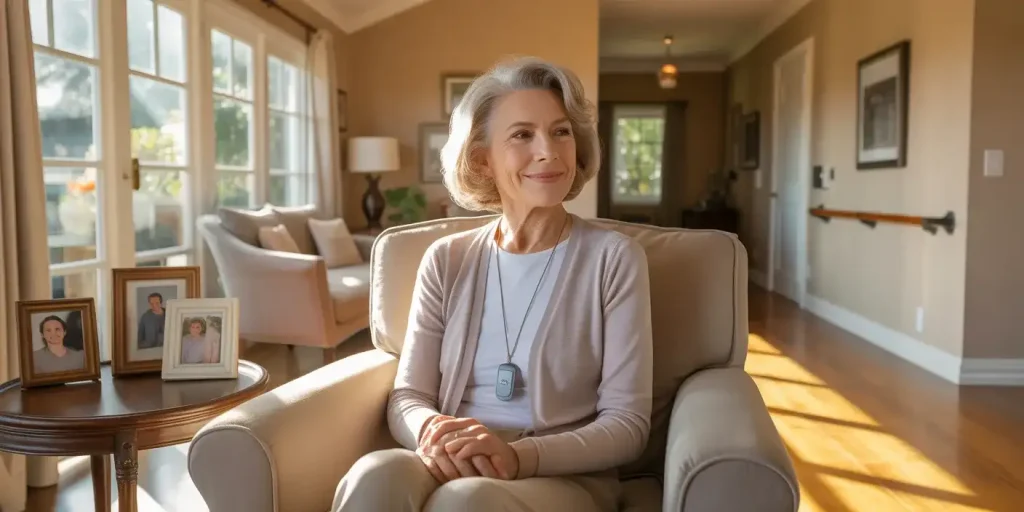
Margaret had lived in her home for 42 years. After her husband passed away, her daughter Karen started worrying. Her mother moved a little slower now, and those porch steps seemed steeper every winter.
Karen asked me the question I hear most often from family caregivers: “Is Mom a good candidate for aging in place?”
The lesson I’ve learned from working with hundreds of families is this: aging in place isn’t just about stubbornness or sentimentality. It’s a real, viable option, but only when the right pieces are in place.
The right answer depends on health, home, support, and planning. In this article, I’ll walk you through exactly what to look for so you can make a confident, informed decision for yourself or someone you love.
Who Is a Good Candidate for Aging in Place?
A good candidate for aging in place is someone whose physical health, cognitive function, home environment, and support system align well enough to make safe, independent or semi-independent living possible.
That doesn’t mean a person has to be in perfect health. Many seniors with chronic conditions, limited mobility, or mild memory challenges age in place successfully, as long as the right supports are in place.
Here are the core traits I look for when assessing whether aging in place is a realistic option:
- Stable, manageable health conditions (even if not perfect)
- Ability to perform basic daily tasks, or access to help with those that are difficult
- A home that can be modified for safety and accessibility
- A reliable support network, family, friends, neighbors, or paid caregivers
- Easy access to healthcare services, including primary care, specialists, therapy, and emergency care
- A safe neighborhood with access to grocery stores, pharmacies, and essential services
- Financial resources to cover home modifications and in-home services
- Sound cognitive health, or early-stage cognitive decline with sufficient supervision
Why Physical Health Is the Starting Point
Physical health is one of the first things I look at, but not in the way most people expect. The question isn’t whether someone is perfectly healthy. The question is whether their health conditions are stable and manageable.
A senior with well-controlled diabetes and mild arthritis may be an excellent candidate for aging in place.
A senior with rapidly declining health who needs skilled nursing care around the clock may not be, at least not without significant in-home medical support.
Here’s what I pay attention to when evaluating physical health:
- Fall risk: is the person steady on their feet, and can grab bars or other aids reduce that risk?
- Medication management: can they take medications safely and on schedule?
- Chronic condition management: is blood pressure, blood sugar, or heart disease under control?
- Mobility and strength: can they get in and out of bed, use the bathroom, and move through the home?
- Continence: incontinence is manageable at home with the right products and routine
Even significant physical limitations can be accommodated at home with the right modifications, equipment, and in-home support. Physical health alone rarely rules out aging in place.
Why Cognitive Health Plays a Critical Role
Cognitive health is often the factor that determines whether aging in place remains safe long-term. Mild forgetfulness is common with normal aging and is not, on its own, a reason to leave home. Dementia, however, requires a more careful assessment.
Cognitive decline affects a person’s ability to make safe decisions, respond to emergencies, manage medications, and recognize dangers in the home. This doesn’t automatically rule out aging in place, but it does change what support looks like.
Seniors in the early stages of dementia can often age in place successfully with the following in place:
- Daily check-ins from a family member, friend, or paid caregiver – there are multiple tech products that you can look into that may help with check-ins.
- Automatic medication dispensers to reduce errors
- Stove shut-off devices or induction cooktops to prevent kitchen fires
- Door sensors and wandering alerts for nighttime safety
- A clear daily routine to reduce confusion and anxiety
When cognitive decline progresses to the point where a person cannot be left alone safely, or poses a risk to themselves or others, it’s time to reassess whether aging in place is still the right choice, or whether memory care is needed.
What the Home Environment Tells You
The home itself is a major part of the equation. A well-designed or well-adapted home can support aging in place for decades.
A home with steep stairs, narrow doorways, or a bathroom that cannot be safely modified may make it much harder, or impossible.
I always do a mental walkthrough of a senior’s home when advising families.
Here’s what I look for:
- Single-floor living – can the person sleep, bathe, and eat all on one level?
- Bathroom safety – is there space for grab bars, a walk-in shower, or a raised toilet seat?
- Entry access – are there steps leading into the home that could be ramped or modified?
- Doorway width – can a walker or wheelchair move through comfortably (ideally 36 inches or wider)?
- Kitchen access – are cabinets and appliances reachable and safe to use?
- Lighting – are hallways, staircases, and bathrooms well-lit at night?
A Certified Aging in Place Specialist (CAPS), like me, can perform a formal home assessment and recommend modifications that fit the budget, the layout, and the individual’s specific needs. Many modifications are far less expensive than families expect.
What a Strong Support Network Looks Like
No one ages in place in true isolation, at least not safely. A strong support network is one of the most important factors in making aging in place work.
Support doesn’t have to mean a full-time caregiver living in the home. For many seniors, a network of part-time help, community resources, and technology fills the gaps beautifully.
Here’s a real-life example. My client Robert, 79, lived alone after his wife moved to a memory care facility. His daughter lived two hours away and could only visit on weekends. At first, the family thought Robert would need to move.
Instead, we set up a schedule where a home health aide visited three mornings a week, a neighbor checked in daily, Meals on Wheels delivered lunch five days a week, and a medical alert device gave Robert the ability to call for help instantly. Robert stayed in his home for four more years, and thrived.
A solid support network typically includes some combination of:
- Family caregivers – even remote check-ins via video call count
- Paid in-home aides – from a few hours a week to full-time live-in care
- Community programs – meal delivery, senior transportation, adult day programs
- Technology – medical alert systems, smart home devices, medication reminders
- Neighbors or faith communities – informal, relationship-based check-ins
When Finances Factor In
Aging in place is often more affordable than people think, but it does require some investment. The cost of home modifications, in-home care, and assistive technology adds up, and it’s important to plan honestly.
Here’s what families should budget for when considering aging in place:
- Home modifications – grab bars, ramps, and shower seats can range from a few hundred to several thousand dollars depending on the scope
- In-home care – the national median cost for a home health aide is roughly $35 per hour as of 2026; part-time help may cost $500–$2,000 per month
- Medical alert systems – typically $25–$60 per month for monitoring
- Smart home technology – voice-activated devices, stove shut-offs, and door sensors range from $30 to several hundred dollars
Funding options include Medicare (limited home health coverage), Medicaid waiver programs, VA benefits for veterans, state-funded home modification grants, and nonprofit programs through organizations like Habitat for Humanity’s Aging in Place initiative. A geriatric care manager or social worker can help identify what’s available locally.
When Aging in Place May Not Be the Right Fit
I believe deeply in aging in place, but I’m also honest with families when it’s not the right fit. Aging in place is not always the safest or best option, and recognizing that takes courage.
Here are the signs I look for that suggest a higher level of care may be needed:
- Repeated falls, especially with injury
- Inability to be left alone safely, even briefly
- Rapidly progressing dementia with wandering, aggression, or confusion about basic safety
- Medical needs that require 24-hour skilled nursing
- Severe social isolation with no available support network (happens often in rural areas)
- A home that cannot be modified to remove serious hazards
If several of these apply, an assisted living community or memory care facility may offer a safer, more supportive environment. That’s not a failure, it’s a loving, informed choice made in the best interest of the person you care for.
| A Final Word from Esther Karen and her mother Margaret sat down together and walked through this checklist. They discovered that Margaret’s ranch-style home was nearly perfect for aging in place, no stairs, a wide bathroom, and a community of neighbors who had known Margaret for decades. With a few grab bars, a medical alert device, and a weekly aide, Margaret has now been safely aging in place for three years. What made it work wasn’t a perfect situation, it was an honest assessment and a solid plan. That’s what I hope this article gives you: the clarity to see what’s possible, and the confidence to take the next step. |
Frequently Asked Questions
| Question | Answer |
| What makes someone a good candidate for aging in place? | A good candidate has stable health, a home that can be safely modified, a reliable support network, and access to local services. Cognitive health and financial resources also play an important role. Many seniors with chronic conditions or mild mobility challenges age in place successfully with the right modifications and support in place. |
| Can someone with dementia age in place? | Yes, in many cases, especially in the early to moderate stages. With daily caregiver support, safety modifications like stove shut-offs and door sensors, and a structured routine, many people with dementia remain safely at home for years. As the disease progresses, a higher level of care may eventually be needed. |
| How do I know if my parent’s home is safe for aging in place? | Start by looking for fall hazards, bathroom accessibility, and whether single-floor living is possible. A Certified Aging in Place Specialist (CAPS) can perform a formal home safety assessment and recommend specific modifications. Many changes, like grab bars and better lighting, are inexpensive and can dramatically reduce risk. |
