
 Aging in Place Directory Hub
Aging in place is increasingly becoming the preferred option for seniors, significantly influencing the landscape of elderly care.
Understanding the statistics behind this trend provides valuable insights for older adults and family caregivers.
The Growing Preference for Aging in Place
Recent studies indicate a strong and consistent preference among seniors to age in place:
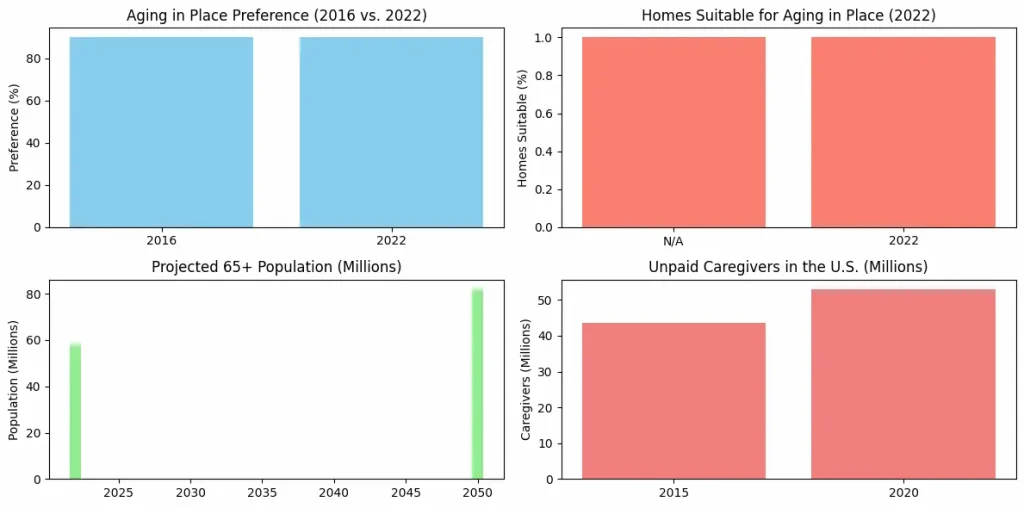
| Year | Preference for Aging in Place |
|---|---|
| 2016 | 63% |
| 2022 | 66% |
This preference is driven by factors such as the desire for independence, emotional attachment to homes, and potential cost savings compared to institutional care like nursing homes.
Emotional and Social Aspects
Aging in place offers significant emotional and social benefits:
- Community Connections: Remaining in familiar surroundings helps maintain community ties, reducing feelings of loneliness and isolation.
- Mental Health: Staying at home can improve mental well-being by providing comfort and stability.
The Challenge of Home Suitability
Despite the preference for aging in place, there is a significant gap in home suitability:
- Only 10% of American homes are currently equipped with the necessary features for aging in place. (source: Forbes)
This highlights the need for widespread home modifications to support seniors.
Common Home Modifications
To address safety and accessibility, common home modifications include:
- Grab Bars: Install in bathrooms near toilets and showers for stability.
- Ramps: Provide easy access to entrances without stairs.
- Stairlifts: Motorized chairs that help navigate stairs safely.
- Widened Doorways: Accommodate wheelchairs and walkers.
- Non-Slip Flooring: Reduce the risk of slips in bathrooms and kitchens.
- Accessible Toilets: Raised seats and handrails for safety.
- Improved Lighting: Ensure adequate lighting in hallways and staircases.
- Accessible Kitchen: Lowered countertops and easy-to-reach appliances.
These changes can range from $100 to $40,000, depending on the extent of the modifications.
Demographic Trends Shaping Aging in Place
Several demographic trends are influencing the aging in place phenomenon:
| Year | Projected 65+ Population (Millions) |
|---|---|
| 2022 | 58 |
| 2050 | 82 |
The Role of Caregivers
The shift towards aging in place has significant implications for caregiving:
| Year | Unpaid Caregivers in the U.S. (Millions) |
|---|---|
| 2015 | 43.5 |
| 2020 | 53 |
This increase reflects the growing need for support services as more seniors choose to age in place.
Challenges Faced by Caregivers
- Financial Strain: Many caregivers face financial challenges due to unpaid caregiving responsibilities.
- Emotional Stress: The demands of caregiving can lead to burnout and emotional exhaustion.
Technology and Aging in Place
Technology plays a crucial role in supporting aging in place:
- 88% of seniors prefer to age in place with the help of smart home devices.
- Nearly half (49%) of older adults own at least one smart home device.
Types of Assistive Technologies
- Health Monitoring Devices: Track vital signs and alert caregivers to potential issues.
- Communication Tools: Facilitate easy contact with family and healthcare providers.
Financial Considerations
Aging in place can be more economical than institutional care, but it requires financial planning:
- Home modifications for aging in place typically cost between $3,000 and $15,000.
Health and Safety Considerations
Aging in place presents benefits and challenges in terms of health and safety:
- 85% of older adults have at least one chronic health condition that could benefit from aging in place support services. (source: National Institute of Health)
- A survey by AARP found that 77% of people aged 50 and over were concerned about being able to afford to stay in their homes as they age. (source: AARP Research)
Conclusion
Aging in place statistics are shaping the future of senior living by highlighting the need for home modifications, caregiver support, and technological solutions.
As the senior population grows, these insights help families and caregivers make informed decisions to ensure safe and comfortable aging in place.
By addressing emotional, social, and technological aspects, the article provides a comprehensive view of how aging in place is influencing senior care.
This information is crucial for seniors and their caregivers as they navigate the complexities of aging in place.
